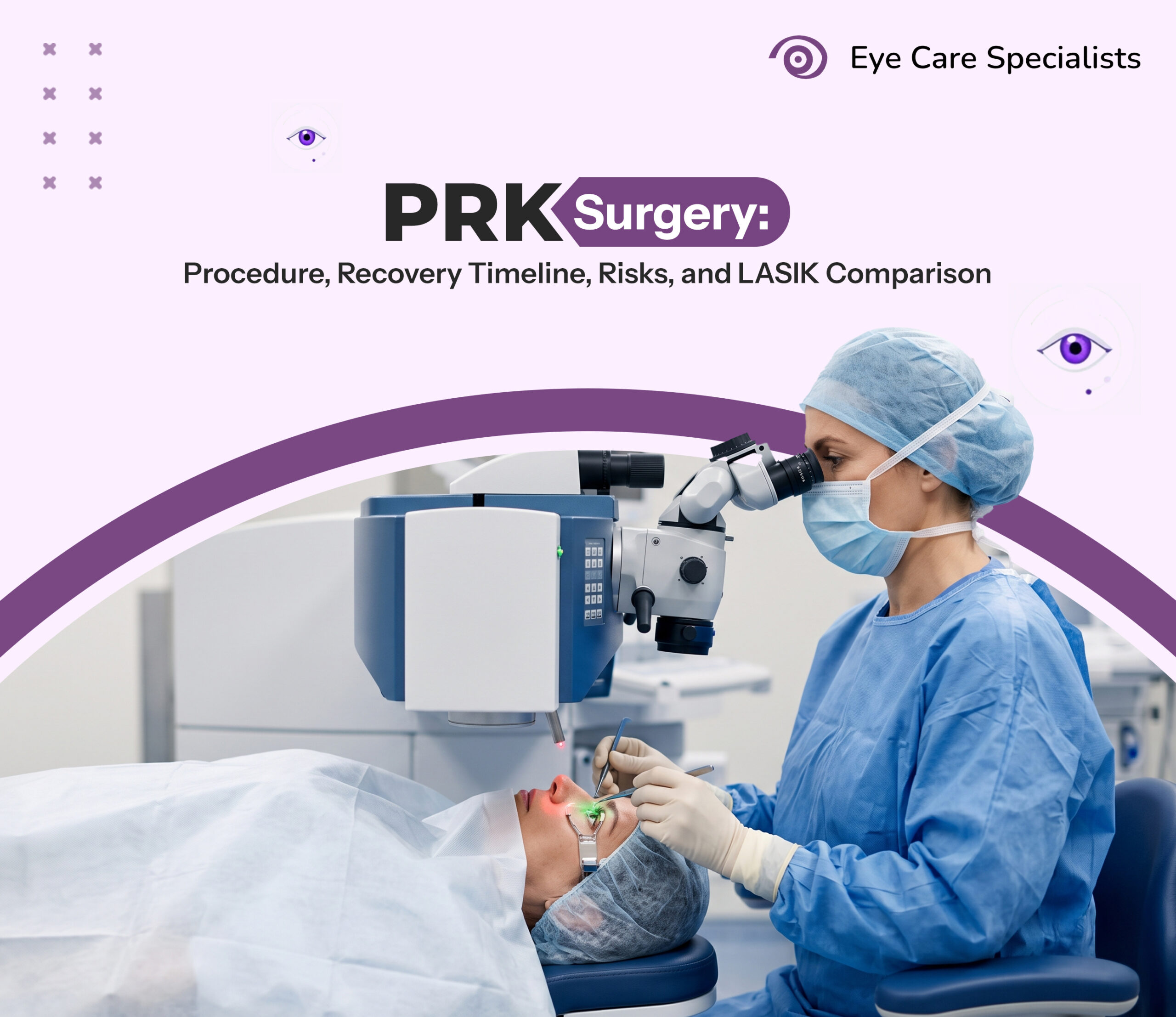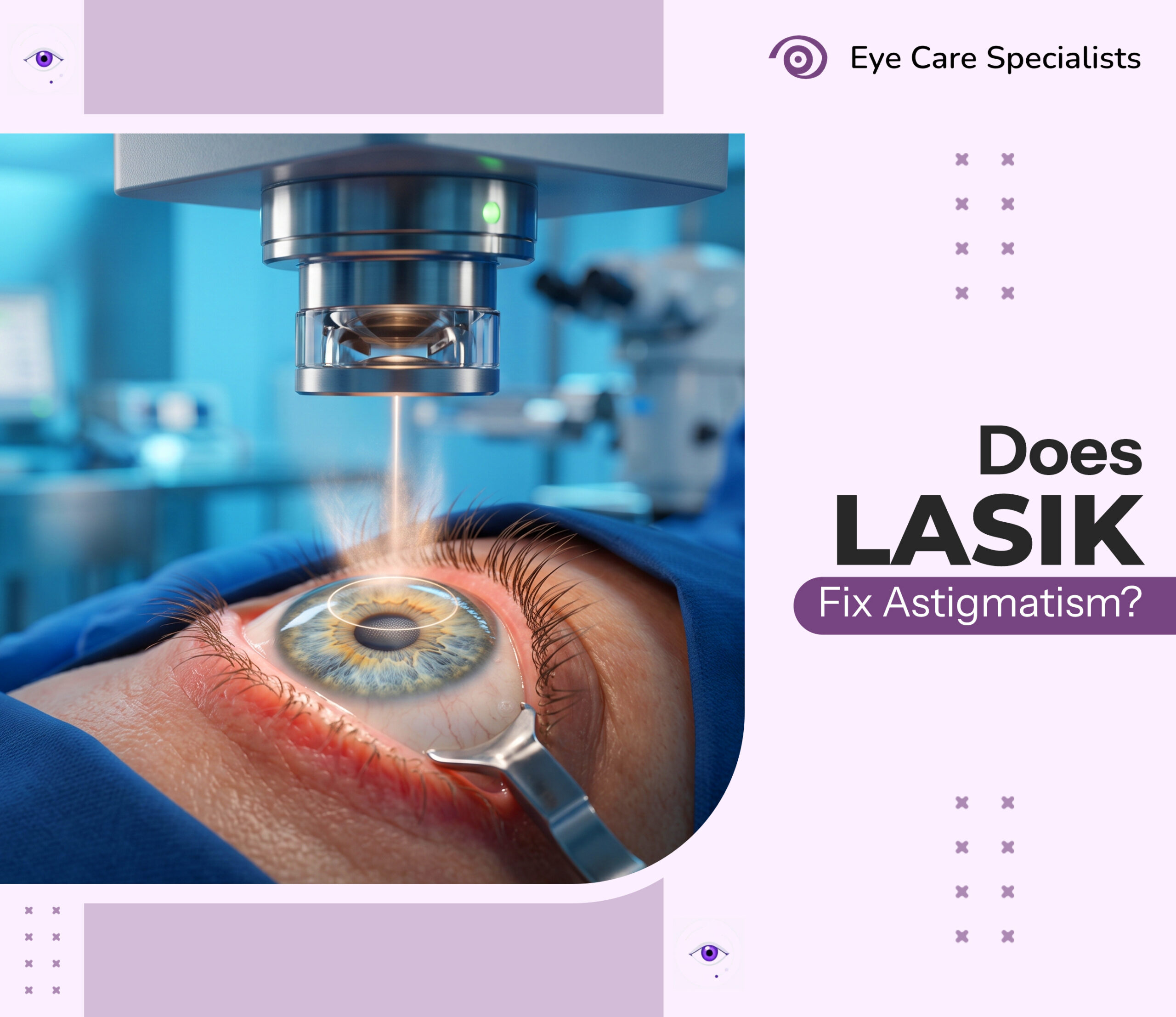

Individuals who rely on prescription glasses or contact lenses for blurry vision may find LASIK a more convenient option. It is a vision correction surgery that uses a specialized laser to reshape the cornea.
While the popularity of this surgery is rising, a common concern remains regarding its cost. Hence, people often ask: Is LASIK covered by insurance?
Usually, most health and vision insurance plans do not fully cover LASIK as they classify it as an elective procedure. It corrects refractive errors that glasses or contact lenses also address.
Still, an insurance plan that excludes LASIK does not mean you have no ways to save.
Depending on your plan and provider, you may have access to LASIK discounts, employer benefits, or tax-advantaged accounts such as an FSA (Flexible Spending Account) or HSA (Health Savings Account).
This guide will explore what LASIK insurance options are available along with discounts and financing options. Understanding your options can help you save on the surgery.
Comparing Your LASIK Payment Options
LASIK (Laser-Assisted In Situ Keratomileusis) is a laser surgery that permanently reshapes the cornea and corrects refractive errors. LASIK surgery can last for many years and reduce dependence on glasses.
However, age-related changes can still affect your vision over time. Also, ophthalmologists don’t consider it medically necessary unless a proper diagnosis has been made.
It is therefore essential to understand the LASIK payment plans to plan your cost.
| Payment Method | Does It Pay for LASIK? | How It Helps? |
|---|---|---|
| Health Insurance | Rarely | Most health plans classify LASIK as an elective procedure, so they generally do not cover the full surgical cost. |
| Vision Insurance | Usually no, but discounts may be available | Some vision plans offer discounted rates for LASIK through participating or in-network providers. |
| FSA | Yes, for eligible expenses | You may use FSA funds to pay for eligible LASIK expenses with pre-tax dollars. |
| HSA | Yes, for eligible expenses | HSA funds can generally be used for eligible LASIK expenses and may offer tax advantages. |
| Financing | Yes, indirectly | LASIK payment plans or medical financing can spread the cost over monthly payments rather than requiring the full amount upfront. |
| Provider Discounts | Yes, indirectly | Some LASIK providers may offer discounts or special pricing that can reduce your total out-of-pocket cost. |
Is LASIK Covered by Health or Vision Insurance, and Why Is It Usually Excluded?
Most health insurance plans do not cover LASIK because they generally consider it an elective procedure rather than medically necessary treatment. LASIK corrects refractive errors that glasses or contact lenses can also manage, so insurers typically exclude it from standard medical benefits.
Vision insurance may work differently. You may even get vision plans or LASIK benefits at discounted rates through participating or in-network providers. However, the rates may differ from one clinic to another.
Coverage depends on the policy and the patient’s circumstances. It is best to check your plan directly to understand whether it offers coverage, a discount, or no LASIK benefit at all.
Can LASIK Ever Be Considered Medically Necessary?
When individuals experience blurry vision even with glasses, LASIK becomes medically necessary. To qualify for an insurance coverage exception, patients must meet strict clinical criteria, which may include:
- Physical Deformities or Trauma: Severe facial or ocular trauma that prevents the patient from physically wearing glasses or contact lenses.
- Severe Contact Lens Intolerance: A documented, severe ocular allergy, dry eye syndrome, or corneal condition that makes contact lenses clinically impossible, combined with an inability to wear glasses due to a physical limitation.
- Severe Anisometropia: An extreme difference in prescription between both eyes that cannot be safely corrected with traditional eyeglasses, resulting in double vision or a lack of binocular vision.
Requesting a medical necessity exception usually requires detailed documentation from your ophthalmologist. It may include exam results, your medical history, and records showing that other treatment options have not worked.
What LASIK Discounts and Insurance Benefits May Still Be Available?
Even when your insurance does not cover LASIK, your plan may still help reduce what you pay. The benefit usually comes as a discount rather than full coverage. Depending on your plan, you may have access to:
- Harvard Pilgrim Health Care: Members may access LASIK savings through programs such as the U.S. Laser Vision Network. The available discount depends on the program and plan.
- EyeMed: Eligible members can receive discounts on LASIK through participating U.S. Laser Vision Network providers. The company offers standard LASIK pricing or discounts based on the current structure.
- Davis Vision: Some plans provide access to laser vision correction discounts through QualSight providers. For example, Harvard Pilgrim lists Davis Vision savings for eligible members.
- Aetna and Cigna: Both offer partnerships with selected centers, providing standard discounts or set contracted pricing, depending on the technology and plan.
How Do Vision-Plan, In-Network, and Employer LASIK Discounts Work?
Vision-plan and employer LASIK discounts usually do not mean your insurance pays for the surgery. Instead, they can reduce the price you pay for laser vision correction when you meet the plan’s requirements.
- Vision-plan discounts: Some vision insurance plans negotiate lower rates with selected LASIK providers. If your plan includes this benefit, you may pay a discounted rate instead of the provider’s regular price.
- In-network savings: Your plan may have a network of LASIK providers with pre-negotiated rates. Choosing one of these providers can help lower your out-of-pocket cost.
- Employer benefits: Some employers offer LASIK discounts as part of their employee benefits. These savings may be available even when your health insurance does not cover the procedure.
How Can You Check Whether Your Insurance Offers a LASIK Benefit?
Your insurance may not pay for LASIK, but your plan could still offer a discount. A quick check before scheduling can tell you what benefits you actually have.
- Check your plan documents: Search for terms such as LASIK, refractive surgery, or laser vision correction in your benefits information.
- Call your insurance company: Use the number on your insurance card and ask whether your plan offers a LASIK benefit or discount.
- Find out which providers qualify: If your plan offers a discount, ask for a list of participating LASIK providers.
- Check your employer benefits: If you get your insurance through work, ask your benefits team whether your employer offers any additional LASIK savings.
- Ask about the fine print: Before making an appointment, confirm the discount amount, eligibility requirements, provider restrictions, and any other conditions that could affect your savings.
Can You Use an FSA or HSA to Pay for LASIK?
Yes, if you have an employer-sponsored flexible spending account (FSA) or health savings account (HSA), you may be able to use those funds to pay for LASIK.
The Internal Revenue Service (IRS) recognizes laser eye surgery as a qualified medical expense. It allows you to use tax-advantaged funds for eligible costs related to the procedure, such as certain preoperative exams and post-operative medications.
The amount you save depends on your tax situation and how much you contribute to the account. So, while an FSA or HSA can make LASIK more affordable, the savings will vary from person to person.
What Is the Difference Between Using an FSA and HSA for LASIK?
Both FSAs and HSAs can help you pay for LASIK with tax-advantaged funds as per IRS, but they work differently. The main differences involve how you contribute, access, and keep the money.
- Flexible Spending Account (FSA)
Your employer sets up the account, and you can contribute up to $3,400 in 2026. FSA funds generally need to be used within the plan year.
However, your employer may offer a grace period or allow part of the unused balance to roll over. Another benefit is that your full annual contribution is generally available at the start of the plan year.
- Health Savings Account (HSA)
An HSA is linked to a High-Deductible Health Plan (HDHP). In 2026, you can contribute up to $4,400 for individual coverage or $8,750 for family coverage.
Unlike an FSA, the money stays yours and rolls over from year to year. You can only use the funds that have already been deposited into the account.
What Financing and Payment Options Can Make LASIK More Affordable?
If insurance does not cover the procedure, you still have several ways to manage the cost. Financing can spread your payments over time, while discounts or tax-advantaged funds may reduce what you need to pay upfront.
- LASIK payment plans: Some providers offer monthly payment plans that let you divide the procedure cost into smaller payments. Terms, interest, and eligibility vary by provider.
- Medical financing: Specialized healthcare financing companies may offer plans for LASIK, often with fixed monthly payments. Review the interest rate, fees, and total repayment amount before signing up.
- Medical credit cards: Some healthcare financing cards can be used for LASIK at participating providers. Promotional interest rates may be available, but check the terms carefully, especially what happens when the promotional period ends.
- FSA or HSA funds: If you have eligible funds available, you may use them toward qualified LASIK expenses, which can reduce the amount you need to finance.
- Provider discounts: Some LASIK practices offer discounts or special pricing. Ask whether the discount can be combined with your insurance benefit or other payment options.
How Do LASIK Financing Plans, Medical Credit Cards, and Monthly Payments Work?
Many refractive surgeries, including LASIK, offer payment options that can make the procedure easier to fit into your budget.
- Healthcare credit cards: CareCredit and similar medical credit cards may offer promotional financing, including no-interest periods of 6, 12, or 24 months. You generally need to pay the balance in full within the promotional period to avoid interest charges under the applicable terms.
- Extended payment plans: Some financing options let you spread the cost over several months or longer. Plans may range from 3 months to 60 months, with interest and other terms depending on the financing provider.
- Credit card rewards: If you choose to use a personal credit card, you may earn cashback, miles, or points. Make sure you understand the interest rate and can pay the balance on time. If you plan to use HSA funds for an eligible expense, confirm the account rules before making the payment.
How Can You Reduce Your Total Out-of-Pocket Cost for LASIK?
You may not be able to get insurance to cover LASIK, but you can still lower the amount you pay out of pocket. Start by checking every benefit and payment option available to you.
- Check your insurance benefits: Ask whether your health or vision plan offers a LASIK discount. Even without coverage, this may reduce your out-of-pocket vision insurance cost.
- Choose an in-network provider: If your plan has negotiated rates with certain LASIK providers, using one of them may help you pay less.
- Use your FSA or HSA: If you have available funds, you may be able to use them for eligible LASIK expenses and reduce the amount you need to pay from your regular income.
- Ask about provider discounts: Some practices may offer discounts or special pricing. Find out whether you can combine these savings with your insurance benefits.
- Compare financing options: If you need to finance the remaining balance, compare interest rates, fees, monthly payments, and the total repayment amount.
- Get the full cost upfront: Ask your LASIK provider what the quoted price includes. A clear estimate can help you plan your budget and avoid unexpected charges.
What Is the Best Step-by-Step Way to Pay Less for LASIK?
You can often lower your LASIK costs by using every benefit available to you. Whether you have medical insurance, vision coverage, or a tax-advantaged account, check your options before scheduling surgery.
- Check your insurance first: Contact your health and vision insurance providers to find out whether your plan offers LASIK coverage, a discount, or access to participating providers.
- Ask about in-network rates: If your plan has negotiated rates for LASIK, choosing an in-network provider may reduce the amount you pay.
- Review your FSA or HSA: Check whether you have funds available for eligible LASIK expenses. Using these funds may help reduce the amount you need to pay out of pocket.
- Ask the provider about discounts: Find out whether the practice offers any discounts or payment options and whether you can combine them with your insurance benefit.
- Compare financing terms: If you still need to pay a balance, compare monthly payments, interest rates, fees, and the total repayment amount.
- Get a complete cost estimate: Before moving forward, ask what the quoted price includes, including examinations, follow-up care, and any other applicable fees.
Plan for Better Vision With Eye Care Specialists
Understanding the cost of LASIK can help you decide without unexpected financial surprises. If you are still wondering, is LASIK covered by insurance, the answer depends on your specific plan and whether it offers coverage or a discount.
While most insurance plans do not cover the procedure, discounts, FSA or HSA funds, and financing options may help make your out-of-pocket expenses more manageable.
Before making a decision, take the time to review your benefits and discuss your options with an ophthalmologist.
At Eye Care Specialists, we have experienced doctors who can perform comprehensive eye evaluations and help you understand your vision correction options based on your individual eye health.
Consult our experts for refractive surgery options to discuss your needs and take the next step toward better vision.
Is LASIK Covered by Insurance: FAQs
1. Does Medicare cover LASIK eye surgery?
Originally, Medicare doesn’t cover LASIK eye surgery as it is viewed as an elective procedure. However, when it qualifies for a necessary eye condition such as cataract, some private plans may offer partial discounts.
2. Does Medicaid ever cover LASIK surgery?
Medicaid only covers LASIK surgery when an ophthalmologist determines that an individual needs the surgery for a specific condition. It could be used when glasses cannot correct the refractive error. Doctors also suggest LASIK for patients with severe refractive errors.
3. Does insurance cover LASIK for astigmatism?
Usually, insurance doesn’t cover LASIK for astigmatism as it can also be managed with functional alternatives like eyeglasses or contact lenses. But if the case is extreme and your ophthalmologist confirms it as medically necessary, you may get partial discounts for the treatment.
4. Does insurance cover a LASIK enhancement or touch-up procedure?
Standard health and vision insurance don’t cover a LASIK enhancement or touch-up procedure because the surgery is considered elective. However, many individual ophthalmologists consider touch-ups a lifetime commitment.
5. Is LASIK tax deductible if I pay out of pocket?
Yes, LASIK is tax deductible when you’re paying out of pocket. But to mark the deductions, you have to meet specific IRS income criteria. According to IRS 502, laser vision correction like LASIK qualifies as a legitimate medical expense because it physically changes a body structure (cornea).
6. Can I use my spouse’s FSA or HSA to pay for my LASIK?
Yes, you can use your spouse’s FSA (Flexible Savings Account) or HSA (Health Savings Account) for LASIK. Under IRS rules, laser eye surgery is a qualified medical expense. Hence, both FSA and HSA allow you to use pre-tax dollars to cover eligible medical costs for yourself.
7. Does insurance cover PRK, SMILE, or ICL differently from LASIK?
Insurance doesn’t cover PRK (Photorefractive Keratectomy), SMILE (Small Incision Lenticule Extraction), and ICL (Implantable Collamer Lens) differently from LASIK. All these procedures fall under the same category: cosmetic, elective, and refractive surgery. It means that they are almost excluded from basic coverage until the ophthalmologist confirms it.
8. Does insurance cover the LASIK consultation and preoperative eye exam?
Health and vision insurance don’t cover LASIK surgery. However, various clinics provide free LASIK consultations. The preoperative exam and surgery are paid out of pocket. But some vision plans provide network discounts.
9. Do LASIK insurance discounts count toward my deductible or out-of-pocket maximum?
No, LASIK insurance discounts don’t count toward the deductible or out-of-pocket maximum. If you have a flexible savings account or a health savings account, you can use pre-tax dollars. This allows you to pay out-of-pocket expenses for the surgery.
10. Are there LASIK discounts or benefits for military members and veterans?
Active-duty military members can receive LASIK discounts or benefits through the Department of Defense’s Warfighter Refractive Eye Surgery Program. It usually depends on deployment status and remaining time of your service.