

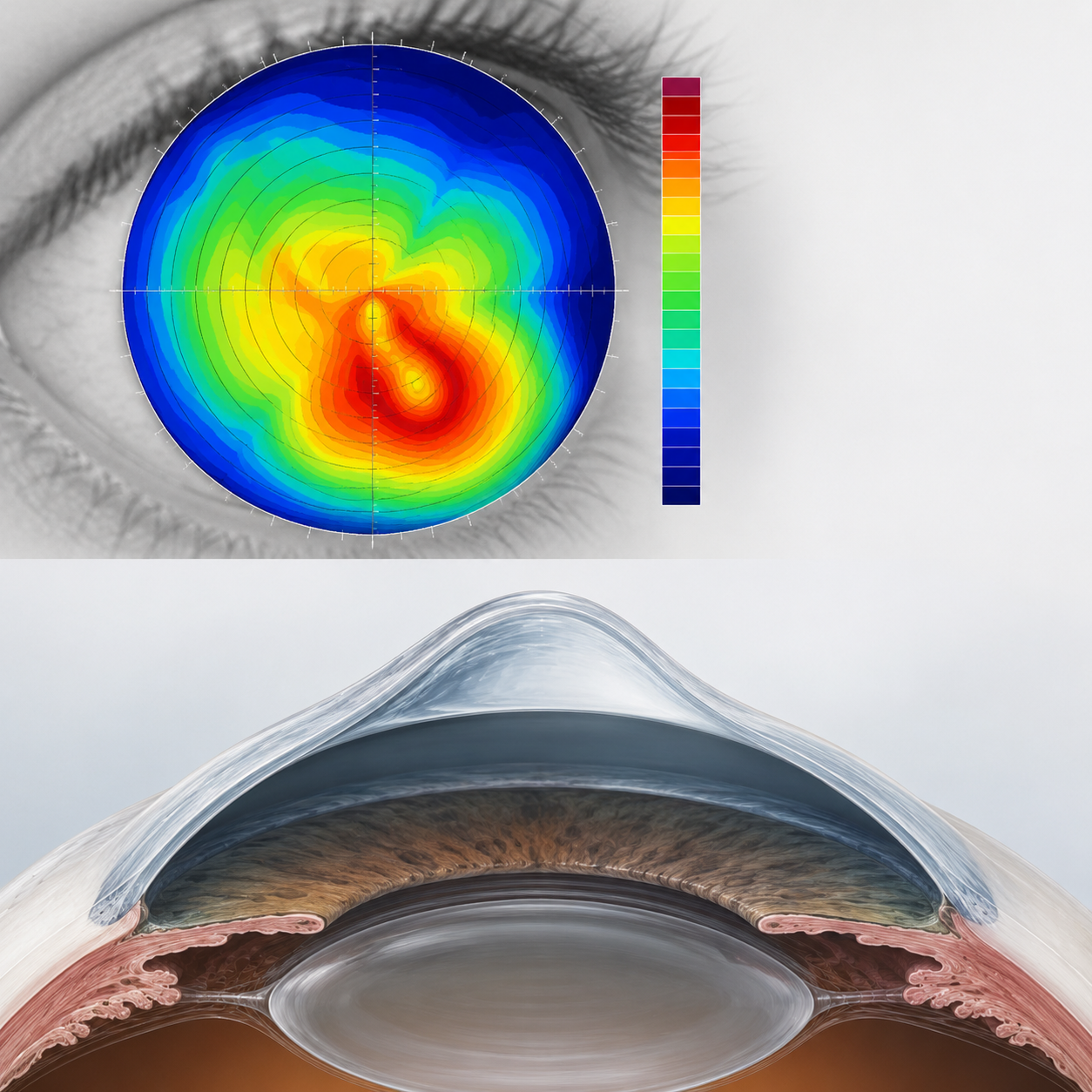
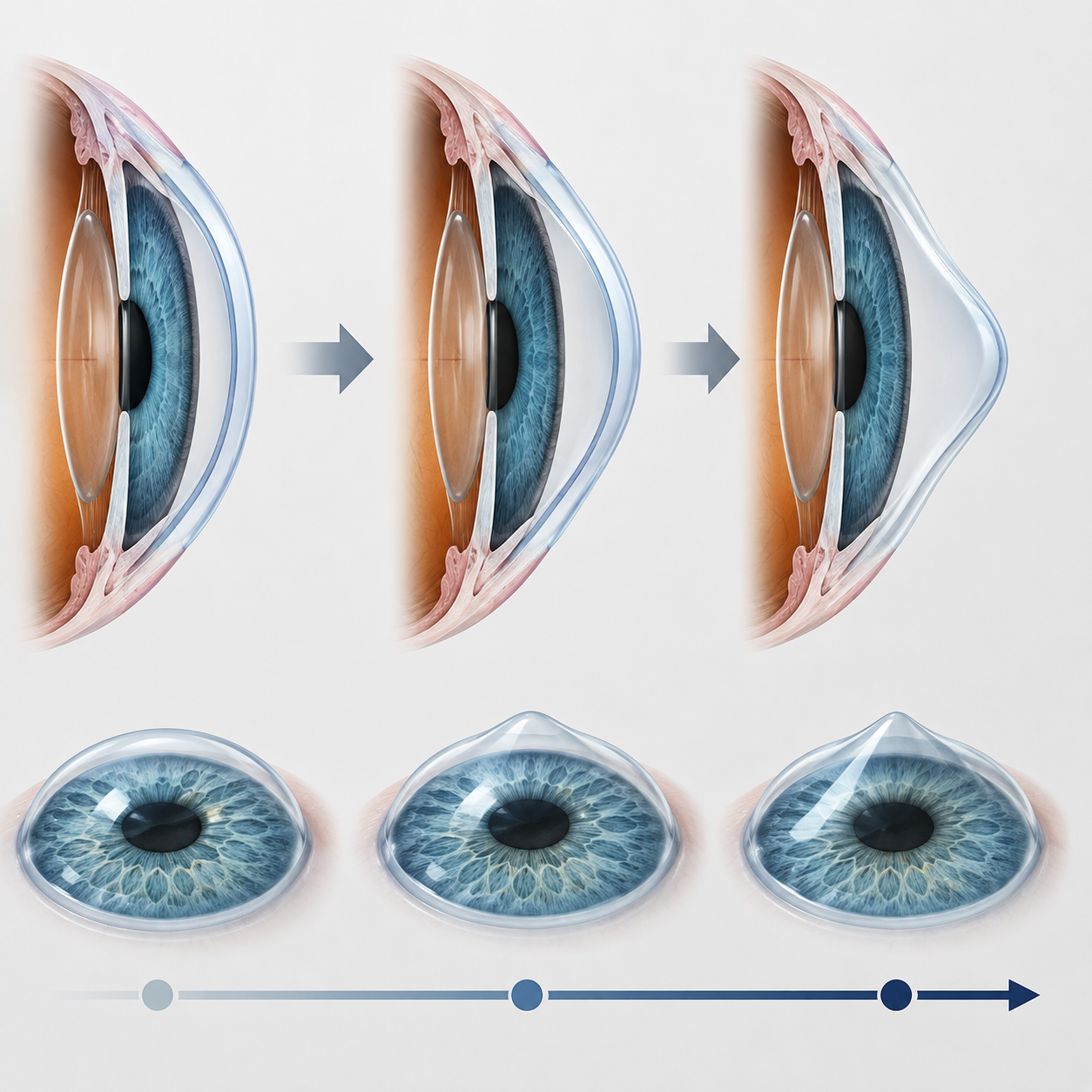
Corneal cross-linking (CXL) is a treatment designed to strengthen a cornea that has become thin, weak, or unstable. It is commonly used for keratoconus, a progressive condition in which the cornea gradually becomes thinner and bulges outward into a cone-like shape. This change can cause blurry vision, distorted vision, increasing astigmatism, glare, and frequent prescription changes.
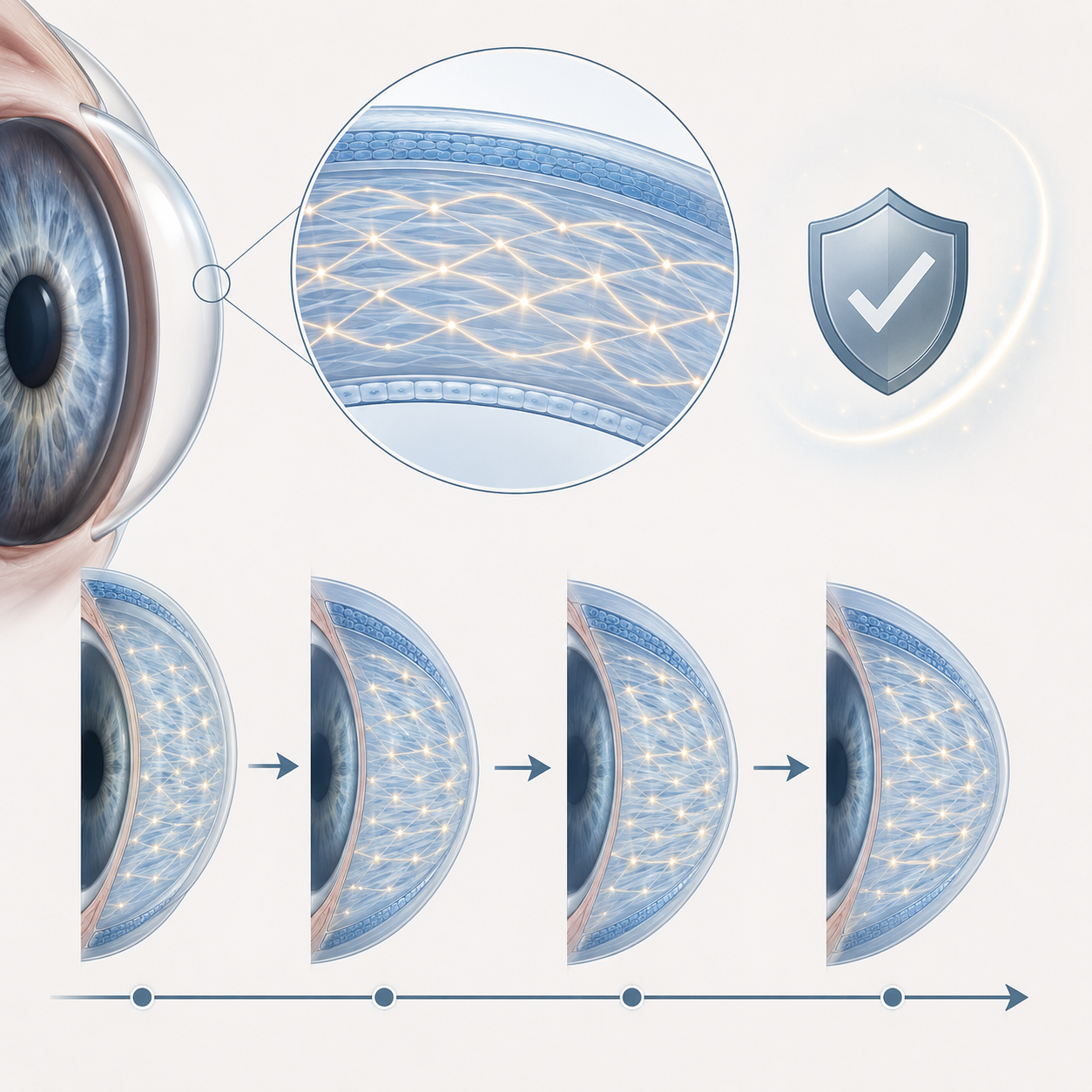
Also known as corneal collagen cross-linking, the procedure combines riboflavin (vitamin B2) eye drops with controlled ultraviolet A (UV-A) light. Together, they create additional bonds within the corneal collagen, helping the tissue become stronger and more resistant to further shape changes.
The primary goal of CXL is to slow or stop the progression of keratoconus or corneal ectasia. It is not the same as LASIK and is not primarily performed to eliminate glasses or contact lenses. Some patients may notice changes in corneal shape or vision over time, but many continue to use glasses or specialty contact lenses after treatment.
At Eye Care Specialists, we evaluate your corneal shape, thickness, prescription history, vision, and overall eye health before determining whether corneal cross-linking is appropriate for you. Our Norwood location provides convenient access for patients looking for keratoconus and corneal cross-linking care in the Greater Boston area.
Cross-linking strengthens weakened corneal tissue and can help slow or stop the progressive changes caused by keratoconus and other forms of corneal ectasia.
Riboflavin and controlled UV-A light help create additional bonds between collagen fibers, making the cornea more resistant to continued thinning and bulging.
By limiting further changes in corneal shape, CXL can help protect the vision you currently have and reduce worsening visual distortion.
Stabilizing keratoconus earlier may help delay or reduce the likelihood of needing more invasive treatment, such as a corneal transplant, in the future.
Your corneal shape, thickness, prescription, vision, and healing are monitored over time so your care can be adjusted as your eyes stabilize.
Every keratoconus patient has a different corneal shape, prescription, rate of progression, and visual need. Our team evaluates these factors before recommending a personalized treatment plan.
Before recommending corneal cross-linking, our ophthalmology team performs a detailed evaluation to determine whether the cornea is showing signs of progression.
Your assessment may include:
Corneal cross-linking uses riboflavin eye drops together with carefully controlled UV-A light to strengthen corneal collagen.
Your treatment plan is selected according to factors such as your diagnosis, corneal thickness, progression, age, previous eye procedures, and overall corneal health.
People sometimes refer to CXL as cross-linking eye surgery, but its main purpose differs from refractive procedures such as LASIK. Instead of reshaping a healthy cornea to correct a prescription, CXL is designed to stabilize a weakened cornea and help prevent further progression.
Keratoconus can change gradually, which makes accurate monitoring an important part of treatment.
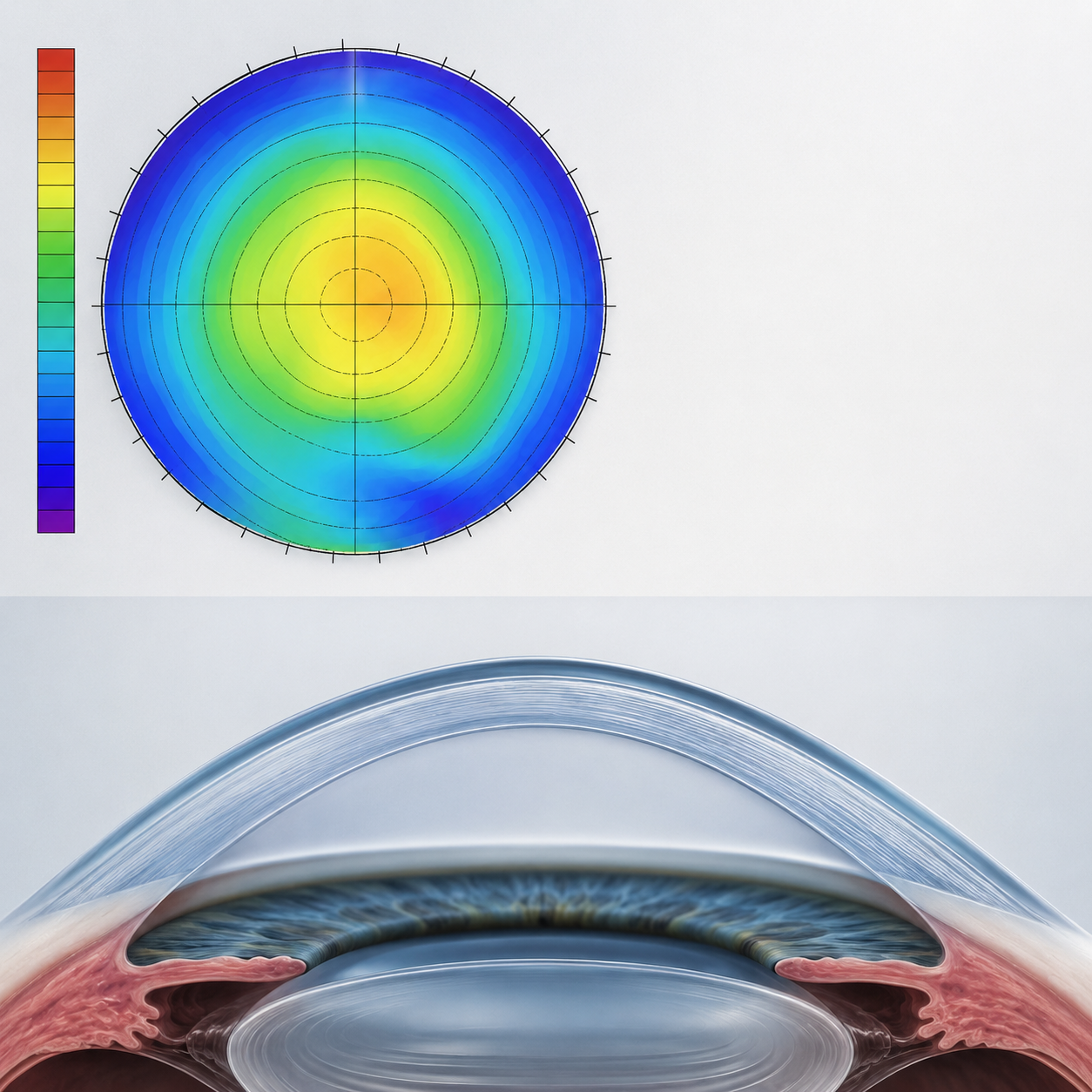
Corneal mapping allows your ophthalmologist to track changes in steepness, thickness, symmetry, and overall corneal shape. Comparing these measurements over time can help determine whether keratoconus is progressing and whether cross-linking should be considered.
After treatment, repeat measurements also help assess how well the cornea is stabilizing.
Cross-linking strengthens the cornea, but it does not necessarily eliminate the prescription or irregular astigmatism already caused by keratoconus.
After your cornea has healed and stabilized, your ophthalmologist will determine whether glasses, standard contact lenses, rigid gas-permeable lenses, scleral lenses, or another form of vision correction may help you see more clearly.
Regular follow-up visits are also important for monitoring healing and confirming that the corneal condition remains stable.


Your ophthalmologist examines your eyes and measures your corneal shape, thickness, prescription, and visual acuity. Previous test results may also be compared to determine whether keratoconus or corneal ectasia is progressing.
Numbing eye drops are used to keep you comfortable. The cornea is then prepared according to the CXL protocol selected for your eye, and riboflavin drops are applied so the corneal tissue can absorb the treatment solution.
The treated cornea is exposed to a controlled amount of UV-A light. The UV-A energy activates the riboflavin and creates additional bonds within the corneal collagen, helping strengthen and stabilize the tissue.
After treatment, your ophthalmologist provides instructions for protecting the eye while it heals. Depending on the treatment approach, prescription drops or a temporary bandage contact lens may be used.


Corneal cross-linking is usually considered when testing shows that keratoconus or another form of corneal ectasia is progressing.
Possible signs include increasingly blurred or distorted vision, frequent changes in glasses or contact lens prescriptions, worsening astigmatism, increasing corneal steepness, or thinning seen on corneal imaging.
Symptoms alone cannot determine whether you need CXL. Your ophthalmologist will compare corneal maps, thickness measurements, prescription changes, and vision tests to determine whether the condition is progressing.
Corneal cross-linking is a procedure used to strengthen weakened corneal tissue.
Riboflavin eye drops are applied to the cornea and activated with controlled UV-A light. This reaction creates additional bonds between collagen fibers inside the cornea.
The added cross-links make the corneal tissue stronger and more resistant to continued thinning and bulging. This is why CXL is commonly used to manage progressive keratoconus and certain forms of corneal ectasia.
Candidates often include patients with progressive keratoconus or corneal ectasia whose testing shows that the cornea is becoming thinner, steeper, or more irregular.
Your ophthalmologist will also evaluate corneal thickness, overall eye health, previous eye procedures, vision, age, prescription changes, and the condition of the corneal surface.
Not every person with keratoconus requires immediate CXL, which is why detailed corneal mapping and progression monitoring are important.
Numbing eye drops are used during the procedure, so patients generally should not feel significant pain while CXL is being performed.
Temporary discomfort can occur as the eye heals. Depending on the cross-linking technique used, patients may experience irritation, tearing, light sensitivity, a gritty feeling, or soreness during the first several days.
Your ophthalmologist will provide specific instructions and medications to help keep you comfortable during recovery.
The length of a corneal cross-linking procedure depends on the treatment protocol being used.
Time is needed to prepare the eye, apply riboflavin, allow the cornea to absorb the solution, deliver UV-A treatment, and complete the post-procedure examination.
Because different FDA-approved and clinically appropriate CXL protocols use different preparation and UV-A exposure times, your ophthalmologist will explain how long your specific appointment is expected to take.
Recovery varies depending on the type of cross-linking procedure and the individual patient.
Vision may initially be blurry or fluctuate, and the eye may feel sensitive to light or irritated. With techniques that involve healing of the corneal surface, the first several days are usually the most noticeable part of recovery.
Vision and corneal measurements may continue changing for weeks or months as healing and remodeling occur. Keep all scheduled follow-up visits so your ophthalmologist can monitor your progress.
Blurred or fluctuating vision is common shortly after CXL.
The length of time it lasts depends on your corneal condition, treatment method, healing response, and the amount of irregular astigmatism present before treatment.
Some patients notice gradual visual improvement as the cornea heals, while others continue to need glasses or specialty contact lenses. The main measure of CXL success is usually corneal stability, rather than immediate improvement in uncorrected vision.
You should arrange transportation home on the day of treatment and should not drive until your ophthalmologist confirms that your vision is safe for driving.
Many patients also need some time away from work, screens, strenuous exercise, swimming, or dusty environments while the corneal surface heals.
The exact timeline varies by treatment technique and occupation. Your ophthalmologist will provide activity restrictions based on your individual recovery.
Possibly. Corneal cross-linking is primarily performed to stabilize the cornea rather than eliminate an existing glasses or contact lens prescription.
Keratoconus can cause irregular astigmatism that remains even after the cornea has been strengthened.
After healing and stabilization, some patients continue with glasses, while others obtain clearer vision with rigid gas-permeable or scleral contact lenses. Your eye care team can determine which option best matches your vision after treatment.
Temporary side effects may include blurred vision, eye discomfort, light sensitivity, tearing, dryness, corneal haze, or changes in vision while the cornea heals.
Less common complications can include delayed healing, infection, corneal scarring, or a reduction in vision.
Your individual risk depends on factors such as corneal thickness, eye health, treatment technique, and healing response. A detailed pre-treatment evaluation helps determine whether the benefits of CXL outweigh the risks for your eye.
Yes. FDA-approved corneal cross-linking treatments are available in the United States.
FDA-approved epithelium-off cross-linking using riboflavin and controlled UV-A light has been available for progressive keratoconus and corneal ectasia following refractive surgery. An FDA-approved epithelium-on treatment for keratoconus also became available in 2025.
The appropriate technique depends on your diagnosis, age, corneal measurements, and other clinical factors. Your ophthalmologist can explain which CXL treatment is available and appropriate for you.
Address: 31 Pine Street Suite 201 Norfolk, Ma 02056
Hours of operation:
Mon-Thurs: 8:00am-5:00pm
Wednesday: 8:00am-7:00pm
Friday: 8:00am-4:00pm
Address: 91B Central Street Norwood, Ma02062
Hours of operation:
Mon-Thurs: 8:00am-5:00pm
Friday: 8:00am-4:00pm
Address: 825 Washington Street Suite 230 Norwood, Ma 02062
Hours of operation:
Mon-Thurs: 8:00am-5:00pm Friday: 8:00am-4:00pm
"*" indicates required fields