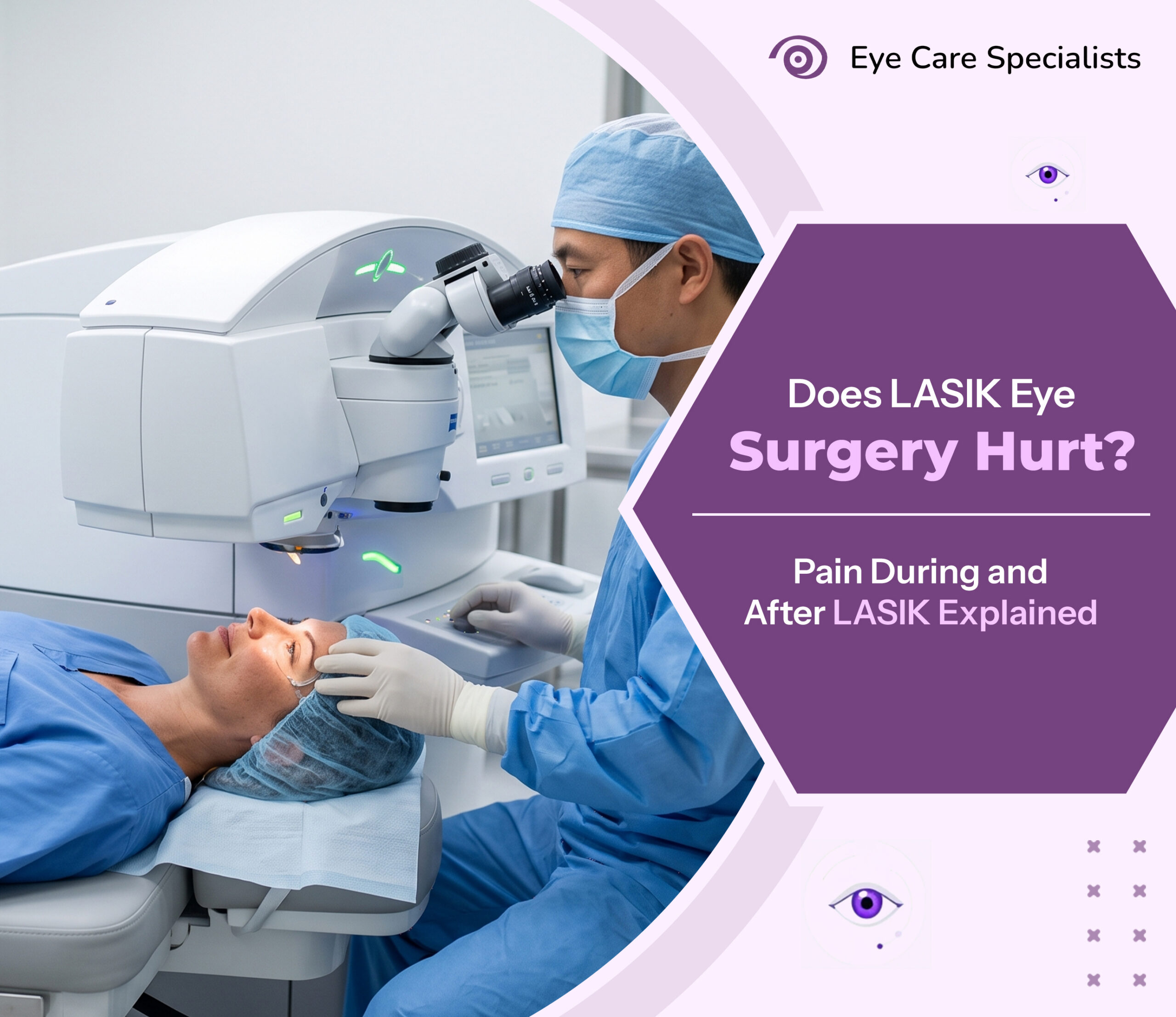
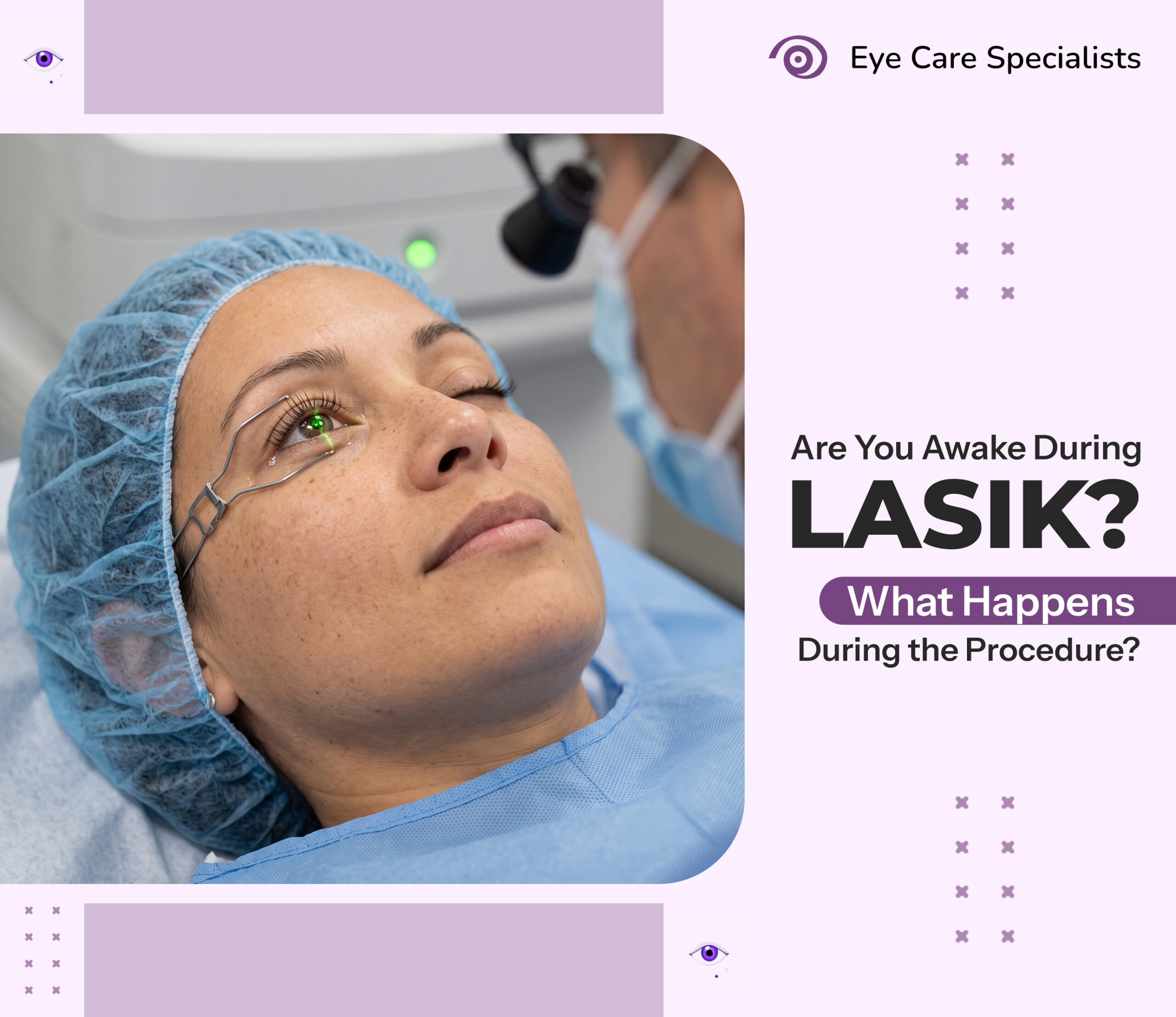
LASIK is a common refractive surgery. One question that often comes up when people consider this treatment is: Are you awake during LASIK?
The short answer is yes. You remain awake and alert throughout the procedure. That may sound unsettling at first, but general anesthesia is not usually needed for LASIK.
Instead, your surgeon applies numbing eye drops to keep your eyes comfortable during treatment.
If you feel anxious, your surgeon may also offer a mild relaxing medication. This can help you feel calmer without putting you to sleep.
Being awake also allows you to follow simple instructions during the procedure. Your ophthalmologist may ask you to look at a steady fixation light while the laser treats your cornea.
Knowing what to expect can make LASIK feel far less intimidating. The more familiar the process feels, the easier it may be to approach your procedure with confidence.
What Happens During LASIK While You Are Awake?
During LASIK surgery, you remain fully conscious. The numbing eye drops make the process comfortable.
Here’s what happens during LASIK:
- You lie comfortably with your head supported while the surgical team prepares your eyes.
- Numbing eye drops are placed in your eyes before treatment begins. These provide local anesthesia without putting you to sleep.
- A mild oral sedative may be offered if you feel nervous. It can help you relax while keeping you awake.
- A small instrument keeps your eyelids open during the treatment. This helps prevent involuntary blinking.
- You are asked to look at a fixation light while the laser works. Your cooperation helps the surgeon maintain accurate treatment.
- Your surgeon communicates with you throughout the procedure. They may check how you are responding during treatment.
- The laser treatment itself takes only a short time. The actual procedure generally takes about 10-15 minutes for both eyes.
What Anesthesia or Sedation Do You Receive During LASIK?
LASIK does not usually require general anesthesia. Instead, your eyes receive local numbing treatment, while medication may help you stay relaxed.
Anesthetic Eye Drops
Your surgeon places numbing drops directly into your eyes before treatment. These provide topical anesthesia by numbing the eye’s surface. You remain awake and can follow simple instructions throughout the procedure.
Mild Oral Sedative
If you feel nervous, your surgeon may offer a mild oral sedative before LASIK. It can help you relax without putting you to sleep. The need for sedation depends on your comfort level and your surgeon’s recommendation.
What to Expect Before, During, and After LASIK?
Knowing what happens at each stage can make LASIK eye surgery feel more familiar and manageable. Here’s what you can expect before the laser treatment, during the procedure, and immediately afterward.
What Happens Before the Laser Treatment Begins?
Once your eye is ready, your surgeon will take a few simple steps to make sure you stay comfortable and your eye remains in the right position during the laser treatment.
- Local anesthesia: Your surgeon will put temporary medication in your eye to numb it. You should not feel pain during the procedure.
- Eyelid holder: A small device gently holds your eyelids open, so you do not have to worry about blinking.
- Head positioning: You will lie back and rest your head in a stable position to help keep your eye properly aligned.
- Fixation light: Your surgeon will ask you to look at a light. This helps you keep your eye focused during the procedure.
- Final checks: Before starting the laser, your surgeon will make sure everything is properly positioned and ready.
What Happens When the LASIK Flap Is Created?
Your surgeon first creates a thin corneal flap to access the underlying tissue. A femtosecond laser performs this step using tiny, precise pulses.
- Suction ring: A gentle suction ring holds your eye steady. You may feel some pressure, and your vision may briefly become dim.
- Femtosecond laser: The laser creates the corneal flap by carefully separating the tissue layers.
- Flap lifted: Your surgeon gently folds the flap back to expose the underlying corneal tissue.
- Minimal sensation: The numbing drops used earlier help keep you comfortable throughout this step.
What Happens When the Laser Reshapes Your Cornea?
With the corneal flap gently moved aside, your surgeon can now reshape the exposed corneal tissue.
An excimer laser removes a precise amount of tissue based on the correction planned for your eyes.
- Fixation light: You will be asked to look at a colored light. Keeping your gaze in that direction helps the laser follow the planned treatment.
- Corneal reshaping: The excimer laser removes microscopic amounts of tissue to change the shape of your cornea and correct your refractive error.
- Quick treatment: The laser works very quickly, and the actual treatment usually takes less than a minute per eye.
- What you see: The fixation light may look blurry while the laser works. You need to keep looking toward it as instructed.
What Happens When the LASIK Procedure Is Finished?
Once the laser eye surgery finishes, your ophthalmologist puts the corneal flap back in place. The flap naturally settles and starts to bond with the cornea, so stitches are usually not needed.
- Flap repositioned: Your surgeon gently moves the flap back over the treated area and makes sure it sits smoothly.
- Eye rinsed: Sterile saline helps clear the eye, followed by protective eye drops.
- Speculum removed: The device that holds your eyelids open is carefully removed.
- Final check: You will blink gently while your surgeon examines the flap under a microscope to ensure it is secure and properly aligned.
- Procedure completed: The LASIK procedure for both eyes typically takes around 10–15 minutes in total.
- Results: How long does a LASIK last? The treatment permanently reshapes the cornea, and the results last for several years. However, age-related vision changes may still occur later.
What Will You See, Hear, and Feel During LASIK?
You will stay awake during LASIK, but the numbing drops will keep your eyes comfortable. You may notice a few sights, sounds, and sensations as your surgeon works.
What Will You See?
You will mainly see a colored light and the bright lights around the surgical microscope. Your vision may briefly become dim when the suction ring is placed, then return as a blurry view.
What Will You Hear?
You may hear the laser clicking or buzzing softly. Your surgeon will also talk you through the procedure and tell you what to expect.
What You Will Feel?
You may feel some pressure when the suction ring holds your eye in place. You may also notice cool eye drops, but you should not feel sharp pain or scraping.
What Happens If You Blink, Move Your Eye, Cough, or Look Away During LASIK?
Nothing bad will happen if you blink, move your eye, cough, or look away during LASIK. It is not possible to sit perfectly still during the vision correction surgery, and the ophthalmologists know that.
Modern ophthalmic technology is engineered to handle these human variables safely. A small lid speculum gently keeps your eyelids open, so you cannot accidentally blink during the treatment.
Your eyes are also numbed with anesthetic drops, which helps reduce the urge to blink and keeps you comfortable.
Do You Have to Keep Your Eye Perfectly Still During LASIK?
No, you do not have to keep your eye perfectly still during LASIK.
Modern LASIK systems use eye-tracking technology to monitor your eye movements during treatment. If your eye moves outside the safe treatment area, the laser can pause automatically.
A lid speculum also keeps your eyelids open, so you do not have to worry about blinking. Your surgeon will guide you throughout the procedure and make sure your eye stays properly positioned.
How Long Are You Awake for the LASIK Procedure, and What Happens Immediately Afterward?
You remain awake throughout the LASIK procedure, which takes about 10-15 minutes per eye. Your surgeon uses numbing eye drops to keep you comfortable, so general anesthesia is not needed.
Once the procedure is over, your surgeon will check your eyes and give you the required eye drops and protective glasses. Your vision may be a little blurry at first, and your eyes may water or feel sensitive to light.
You can generally head home soon after, but you will need someone else to drive you.
Understand Your LASIK Procedure With Eye Care Specialists
So, are you awake during LASIK? Yes, you remain awake throughout the entire laser eye surgery.
You will be able to see, hear, and feel certain things during the procedure. The doctor will put anesthetic drops to numb your eyes while treating your cornea.
Even if you blink or move slightly, the laser technology will track your movements, and a lid speculum will keep your eyelids open from accidental blinks.
If you’re still unsure about the LASIK procedure, you should seek an ophthalmologist.
At Eye Care Specialists, our experienced ophthalmologists explain each step of your procedure before it begins and help you feel comfortable throughout your LASIK journey.
We also help you understand your refractive surgery options and choose an approach suited to your vision needs.
Speak to our ophthalmologists and make an informed decision about your eye care today!
FAQs
1. Can I Talk to My Surgeon While LASIK Is Being Performed?
Yes, you can speak to your surgeon during LASIK if necessary. However, it is best to remain quiet. If you need to cough, speak up, and the surgeon will pause the laser immediately.
2. Can I Listen to Music During LASIK Surgery?
Yes, you can listen to music during LASIK surgery. In fact, many clinics play background music in the suite, or you can wear a single earbud. The volume must be kept low so you can easily hear your surgeon’s instructions.
3. What Should I Do If I Have a Panic Attack or Feel Claustrophobic Before LASIK?
If you have a panic attack or feel claustrophobic before LASIK, notify the surgeon. The ophthalmologists are highly experienced with nervous patients and can offer a mild relaxing option, guide your breathing, or walk you through the process.
4. Can Someone Stay With Me in the LASIK Procedure Room?
Usually, sterile protocols prevent family from entering the suite. However, some clinics have viewing windows where drivers can watch, and your team will remain right by your side to support you.
5. Can LASIK Be Performed If I Have Trouble Focusing on a Fixed Object?
Yes. Modern eye-tracking systems easily manage minor focus drifts or tremors. If steady fixation is difficult, your surgeon will evaluate whether specialized tracking adjustments can safely accommodate your eyes.
6. What Should I Tell My Surgeon If I Am Extremely Nervous About LASIK?
If you’re extremely nervous about LASIK, inform your surgeon right away. It will help them personalize the approach. If that means explaining every mechanical sound, providing extra numbing drops, or offering light sedation, they will do it to keep you relaxed.
7. Can I Take My Usual Anxiety Medication Before LASIK?
Yes, you can take your daily prescribed anxiety medication before LASIK. Some prescriptions can interact with the light sedative offered at the clinic, so your doctor will provide instructions on whether to take your dose that morning.
8. Why Is Only One Eye Treated at a Time During LASIK?
Treating one eye at a time allows the laser and surgeon to focus on a single optical path. It ensures sterile instruments are perfectly positioned, maximizing safety and accuracy before correcting the second eye.
9. Can You See the Laser Cutting or Reshaping Your Eye During LASIK?
No, you cannot see the laser beam, as it uses wavelengths of light completely invisible to the human eye. You will only see the steady colored fixation light and the microscope’s illumination.
10. Can LASIK Be Stopped After the Procedure Has Started If There Is a Problem?
Yes, this procedure can be safely paused. If you need to move or the tracker detects any misalignment, the laser instantly shuts off. Your surgeon can safely reposition you and resume.