If you’ve been experiencing cloudy vision for a long time now, chances are you have a cataract. The only effective way to cure a cataract is to undergo surgery.
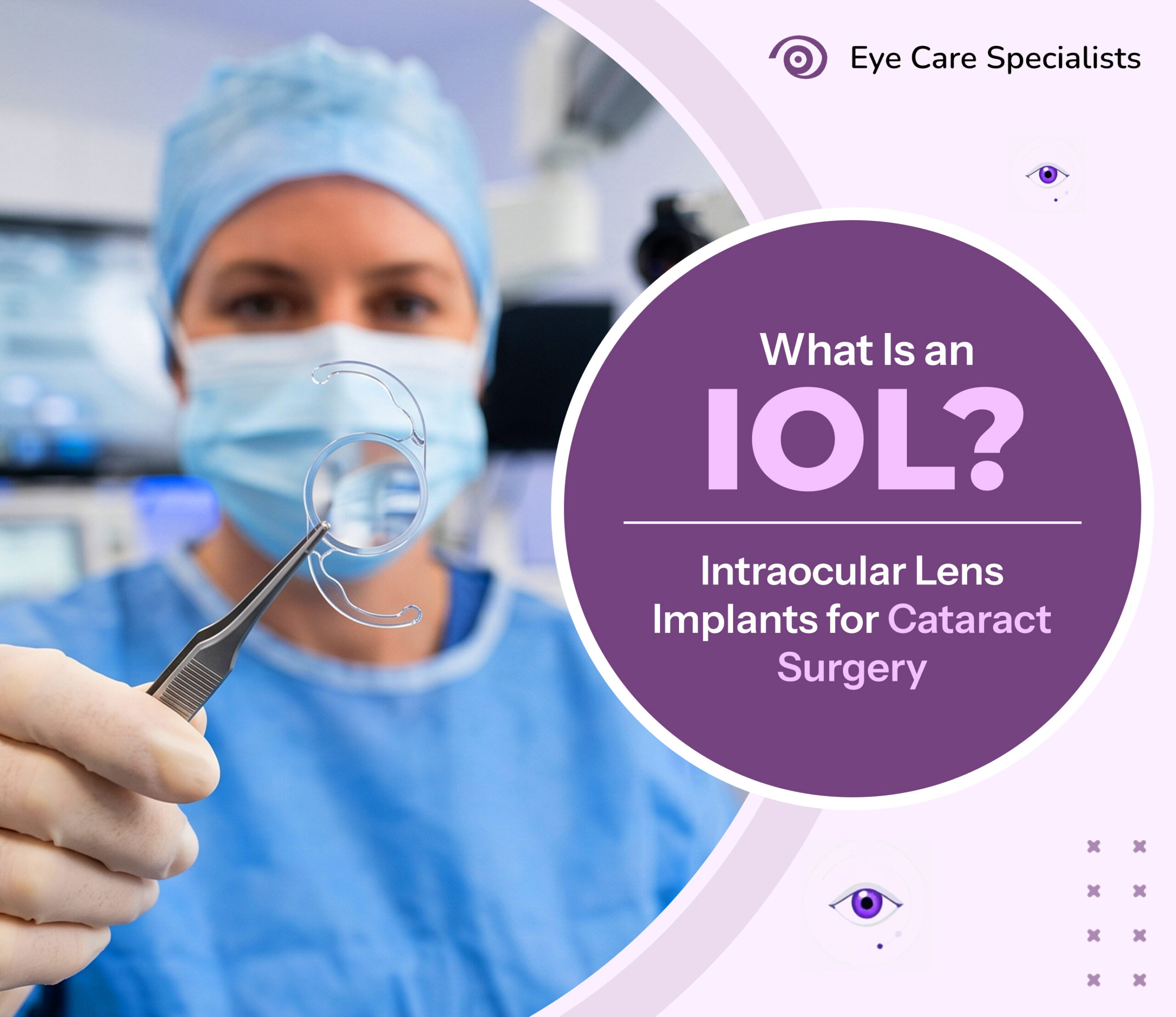
An ophthalmologist will remove the clouded eye lens and replace it with an artificial lens, known as an intraocular lens (IOL). Earlier, these lenses had fixed focus. But with changing technology, people can get customizable options in IOLs, such as the Light Adjustable Lens (LAL).
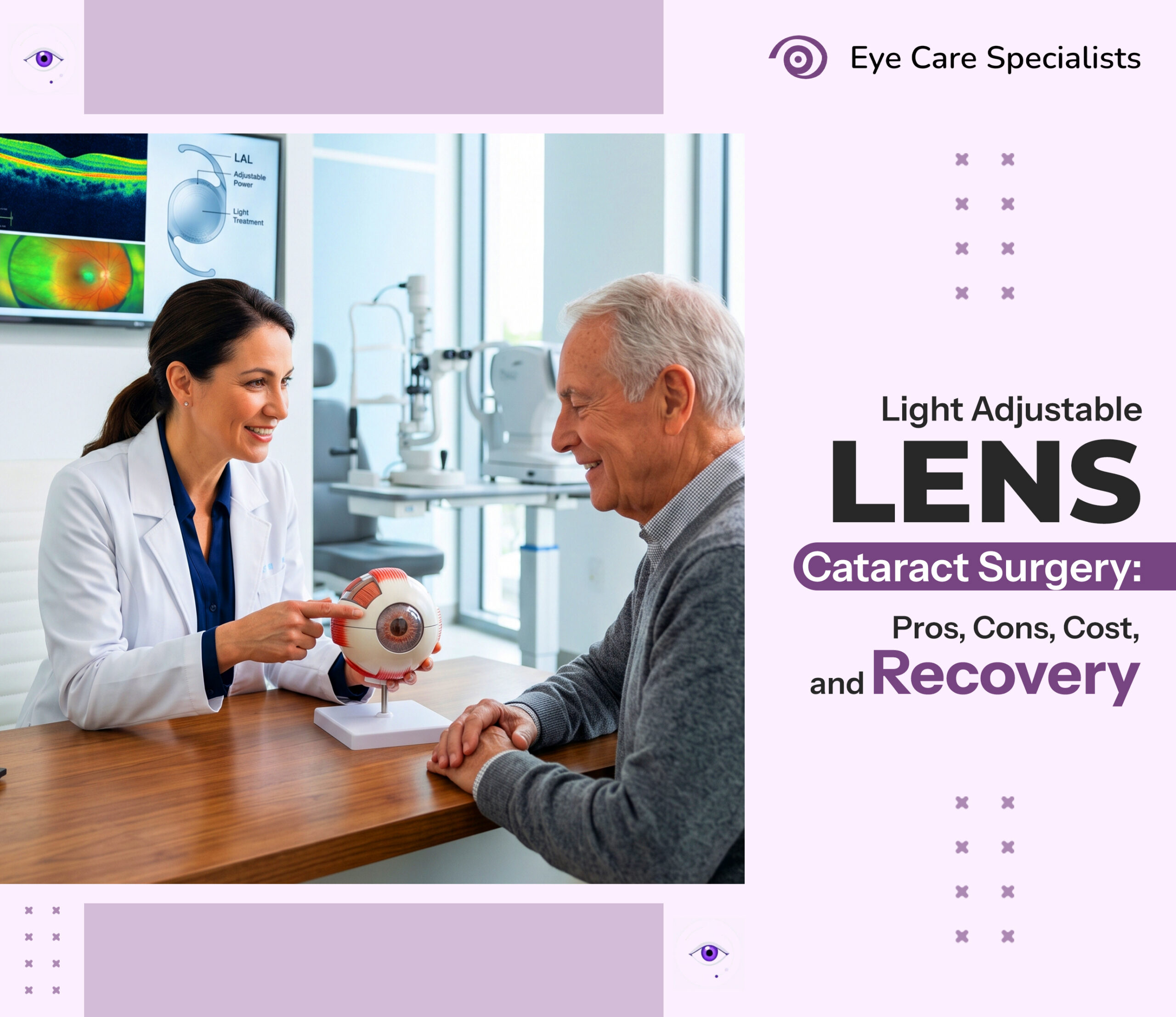
Made from silicone, it is a photosensitive lens that allows an ophthalmologist to fine-tune a patient’s vision after surgery. Such a customization improves your distance vision, gives you independence from glasses, and offers more precise results than a fixed-power lens.
However, the fine-tuning often requires follow-up visits. As a result, the cost for LALs is also higher than traditional lenses.
If you’re wondering how light adjustable lens cataract surgery works, you’ve come to the right place.
This blog outlines what a light adjustable lens is, how it is different from a standard cataract lens, and how it helps a patient after cataract surgery. You will also learn about the disadvantages and costs of LALs.
What Is Light Adjustable Lens for Cataract Surgery?
A light adjustable lens (LAL) is a premium IOL used as a replacement for the clouded natural lens during cataract surgery. It is made from a photoreactive material, such as silicone, that responds to controlled light treatments after implantation.
Once the surgery is complete, the ophthalmologist adjusts the lens to match your vision better. When the desired vision is achieved, the lens is permanently set. It allows the ophthalmologist to recommend a prescription that suits your eyes and lifestyle.
How is the Light Adjustable Lens different from a standard cataract lens?
The biggest difference is that a light-adjustable lens can be adjusted after cataract surgery, which is not possible with a standard cataract IOL. According to the National Library of Medicine, LAL improves refractive outcomes in eyes.
As an ophthalmologist adjusts the lens, your vision becomes clearer. However, standard cataract lenses determine your power before the surgery. These include:
- Monofocal lens: Corrects vision at one distance.
- Toric lens: Corrects astigmatism.
- Multifocal lens: Balances multiple vision, but it requires pre-measurements.
How does the Light Adjustable Lens work after surgery?
After cataract surgery, the Light Adjustable Lens remains adjustable for a shorter period. It allows the doctor to fine-tune vision as your eye heals. Instead of relying on pre-surgery measurements, LAL offers customized vision correction.
Here’s how a light-adjustable lens works after surgery:
- Allow your eye to heal: After cataract surgery, your eye needs time to recover before any adjustments are made.
- Wear UV-blocking glasses: From the day of surgery until your treatment is complete, you’ll need to wear UV-blocking glasses whenever you’re awake to protect your eye from unintended UV light exposure.
- Attend light adjustment sessions: During each light adjustment appointment, your ophthalmologist uses the Light Delivery Device (LDD) to check your vision and to apply a controlled beam of light to the lens.
- Refine your prescription: Depending on your vision goals, your ophthalmologist can make small adjustments to your prescription for distance, intermediate, and/or near vision.
- Complete the final lock-in: Once you and your ophthalmologist are satisfied with your vision, one or two additional light treatments permanently stabilize the lens.
What does “test-drive your vision” mean with LAL?
Test-driving your vision with LAL means you can try it out after cataract surgery, before your lens prescription is permanently set. While you’re adapting to the lens, your ophthalmologist monitors your vision and makes minor adjustments to the lens based on how well you are seeing and your feedback.
If you want sharper vision or different balance, your doctor makes those adjustments before the final lock-in. The adjustment after surgery helps ensure your final vision aligns as closely as possible with your daily needs.
What Are the Pros and Cons of Light Adjustable Lens Cataract Surgery?
Light Adjustable Lens technology offers a level of customization that traditional cataract lenses cannot. However, like any medical procedure, it has both advantages and limitations.
The following table outlines the pros and cons of light adjustable lens cataract surgery:
| Parameter | Pros | Cons / Considerations |
| Vision Precision | Offers post-surgery fine-tuning to correct uncorrected vision. | Achieving the desired results requires multiple sessions. |
| 20/20 Vision Potential | Patients may achieve 20/20 visual acuity, based on eye health. | Not reliable for patients who have macular disease or pupillary dilation issues. |
| Glasses Dependence | May reduce the need for glasses for many daily activities. | Some people require glasses for prolonged computer work. |
| Customization After Surgery | Vision can be refined after cataract surgery instead of relying only on preoperative calculations. | Adjustments are only possible during the treatment period before the lens is permanently locked. |
| Lifestyle-Based Vision Goals | Your ophthalmologist can customize your vision based on your daily activities, hobbies, and preferences. | Patients must clearly communicate their visual priorities before the final adjustment. |
| Astigmatism Correction | Small amounts of astigmatism and other residual refractive errors can often be corrected during the adjustment process. | It may not correct every type or degree of astigmatism, depending on the individual eye. |
| Previous LASIK or PRK | Provides predictable outcomes, where standard lens calculations are less accurate. | Suitability still depends on the condition of the cornea and a comprehensive eye evaluation. |
| UV Protection Requirement | UV-protective eyewear prevents UV exposure to the lens until treatment is complete. | Mandatory requirement to wear UV-protective glasses before final lock-in. |
| Follow-Up Visits | Allows ophthalmologist to refine vision for best-possible results. | Several doctor’s appointments make the process lengthy. |
| Cost | Additional customization leads to higher satisfaction among patients seeking premium vision results. | Costs more than traditional IOLs due to postoperative adjustments. |
| Candidate Suitability | Excellent option for carefully selected patients who want highly personalized vision correction. | May not be suitable for all patients, especially those with pre-existing macular disease. |
How Much Does Light Adjustable Lens Cataract Surgery Cost?
The average cost of Light Adjustable Lens cataract surgery ranges between $4,000 and $7,000. According to a study published in the Journal of Refractive Surgery, LALs are more expensive than standard cataract lenses.
However, the investment helps patients achieve enhanced vision outcomes. In fact, when you’re comparing the upsides and downsides of LAL cataract surgery, the cost is the only limitation associated with the lens.
What affects the cost of Light Adjustable Lens cataract surgery?
The cost of LAL is different for every patient. It depends on the technology used, post-surgery customization, and whether additional services are included in the treatment plan.
Factors that influence Light Adjustable Lens cataract surgery cost include:
- Ophthalmologist’s expertise: Experience with LALs for cataract surgery may affect professional fees.
- Light adjustment treatments: The number of postoperative light adjustments needed to achieve the desired vision affects the cost.
- Follow-up appointments: After the cataract surgery, the number of follow-up appointments influences the cost.
- Additional eye conditions: Complex eye issues that require a comprehensive eye exam affect the overall cost of the cataract surgery.
Does insurance or Medicare cover Light Adjustable Lens surgery?
Insurance and Medicare plans do not fully cover Light Adjustable Lens surgery. They usually cover the medically necessary portion of cataract surgery and a standard monofocal IOL. However, when the lens requires LAL technology, customization, and follow-up visits, it becomes a premium IOL upgrade.
As a result, patients are generally responsible for the out-of-pocket costs associated with the lens. Coverage varies by insurance plan, so it’s important to verify your benefits with your provider before surgery.
What Is the Recovery Timeline After Light Adjustable Lens Cataract Surgery?
Most patients experience clearer vision within a few days after the surgery. However, the complete recovery process takes place about 6-10 weeks. As ophthalmologists adjust the lens after surgery, it takes time for the final prescription to lock in.
A typical recovery timeline after light adjustable lens cataract surgery includes:
- Day 1: Your ophthalmologist examines your eye to confirm it is healing properly.
- Weeks 1-3: Your eye is in the healing phase, and the vision gradually gets clearer. You should wear UV-protective glasses whenever you’re awake to protect the lens from unintended UV exposure.
- Weeks 3-5: Once your vision is stable enough, you’ll have your first light adjustment treatment. Your ophthalmologist assesses your vision and customizes the lens to your visual goals.
- Weeks 4-7: Most patients require 2 to 4 light adjustment sessions, scheduled spaced out over several days. It allows your ophthalmologist to make small refinements until you’re happy with your vision.
- Weeks 6-10: After the desired vision is achieved, you’ll receive two lock-in treatments, usually spaced a few days apart. These treatments finalize the lens power so it cannot be changed anymore.
- After the final lock-in, you can stop wearing your UV-protective glasses, and your ophthalmologist will continue to conduct follow-up visits to monitor your recovery and long-term eye health.
Is Light Adjustable Lens Cataract Surgery Worth It?
Yes, light adjustable lens cataract surgery is worth it if you want to customize your vision and reduce the dependence on glasses. If you want to balance nearsightedness and farsightedness, LAL offers an excellent opportunity to refine your prescription.
However, it also requires a higher financial commitment, multiple follow-up visits, and strict adherence to postoperative instructions. Based on your visual goals and lifestyle, your ophthalmologist will determine whether the benefits outweigh the additional cost.
Customize Your Vision With Proper Light Adjustable Lens Cataract Surgery
Everyone’s vision requirements are different. But one thing that remains constant is the need to correct clouded vision caused by a cataract. If you require customization of your vision, light adjustable lens cataract surgery is an ideal option.
The ability to adjust the lens after surgery allows your ophthalmologist to refine your vision and optimize your final visual outcome.
At Eye Care Specialists, we help patients understand their eye-related issues and provide necessary treatments. From routine eye examinations to cataract surgery using LAL technology, our ophthalmologists deliver all these services to support your vision.
We also use advanced equipment to assess your eye health and recommend IOLs that suit your lifestyle, budget, and comfort.
Ready to get your lens adjusted to the right vision? Consult our doctors for cataract surgery options and enhance your distance and immediate vision.
Light Adjustable Lens Cataract Surgery: FAQ
Can I drive during the Light Adjustable Lens adjustment period?
Yes, you can drive during the Light Adjustable Lens adjustment period. However, your ophthalmologist should confirm whether your vision meets the legal requirements. Since the prescription changes during the adjustment period, the doctor may recommend that you avoid driving until your vision is stable.
Can I use my phone, computer, or watch TV after LAL surgery?
Yes, you can use phones, computers, or watch TV after LAL surgery as long as it feels comfortable. If your eyes become dry or tired, follow your ophthalmologist’s postoperative instructions. Use your prescribed eye drops and wear eyeglasses if prescribed to reduce discomfort.
What happens if I accidentally forget to wear my UV-blocking glasses?
If you forget to wear UV-blocking glasses, the LAL is exposed to uncontrolled UV light. As a result, it becomes difficult to adjust the lens to the desired vision outcome. Contact your ophthalmologist if you’re exposed to UV light after LAL cataract surgery so they can examine your lens and recommend next steps.
Can both eyes get Light Adjustable Lenses?
Yes, if cataract damage affects both the eyes’ natural lenses and you’re a suitable candidate, an ophthalmologist can implant Light Adjustable Lenses. Most surgeons perform the procedure separately. It helps the first eye to heal before scheduling the cataract surgery for the next eye.
Can Light Adjustable Lens be used for blended vision or monovision?
Yes, a light adjustable lens can be used for blended vision or monovision. The lens allows you to test-drive the vision setup. Once the ophthalmologist understands your vision goals, they fine-tune the lens to the desired vision.
Does LAL cause halos or glare at night?
LAL generally have a lower risk of halos and glare than many multifocal lenses. However, some patients’ visual symptoms may temporarily worsen during healing. But the symptoms go away when the eye heals, and treatment is complete.
Can I travel between LAL surgery and final lock-in?
Yes, you can travel between LAL surgery and final lock-in. However, you should plan carefully. Because the lenses are photosensitive, it is crucial to wear UV-blocking glasses throughout the treatment period.
Will I need new glasses after the Light Adjustable Lens is locked in?
The need for new glasses after the Light Adjustable Lens is locked in depends on your lifestyle and visual goals that you’ve set with the ophthalmologist. If your goal is to reduce dependence on glasses after treatment, the professional will adjust the lens accordingly.
Is Light Adjustable Lens available at every cataract surgery center?
Light adjustable lenses are only available at cataract surgery centers that offer the specialized equipment for postoperative light treatments. Since these are premium lens upgrades, the ophthalmologist needs to be experienced in using the technology properly.
Can a Light Adjustable Lens be removed or exchanged later?
Yes, a light adjustable lens can be removed later. However, it is an extremely invasive process and is quite complex. Because these lenses are made of silicone, there’s a high chance the LAL will crumble during removal. Doctors usually recommend removing the LAL when there’s no other option left.