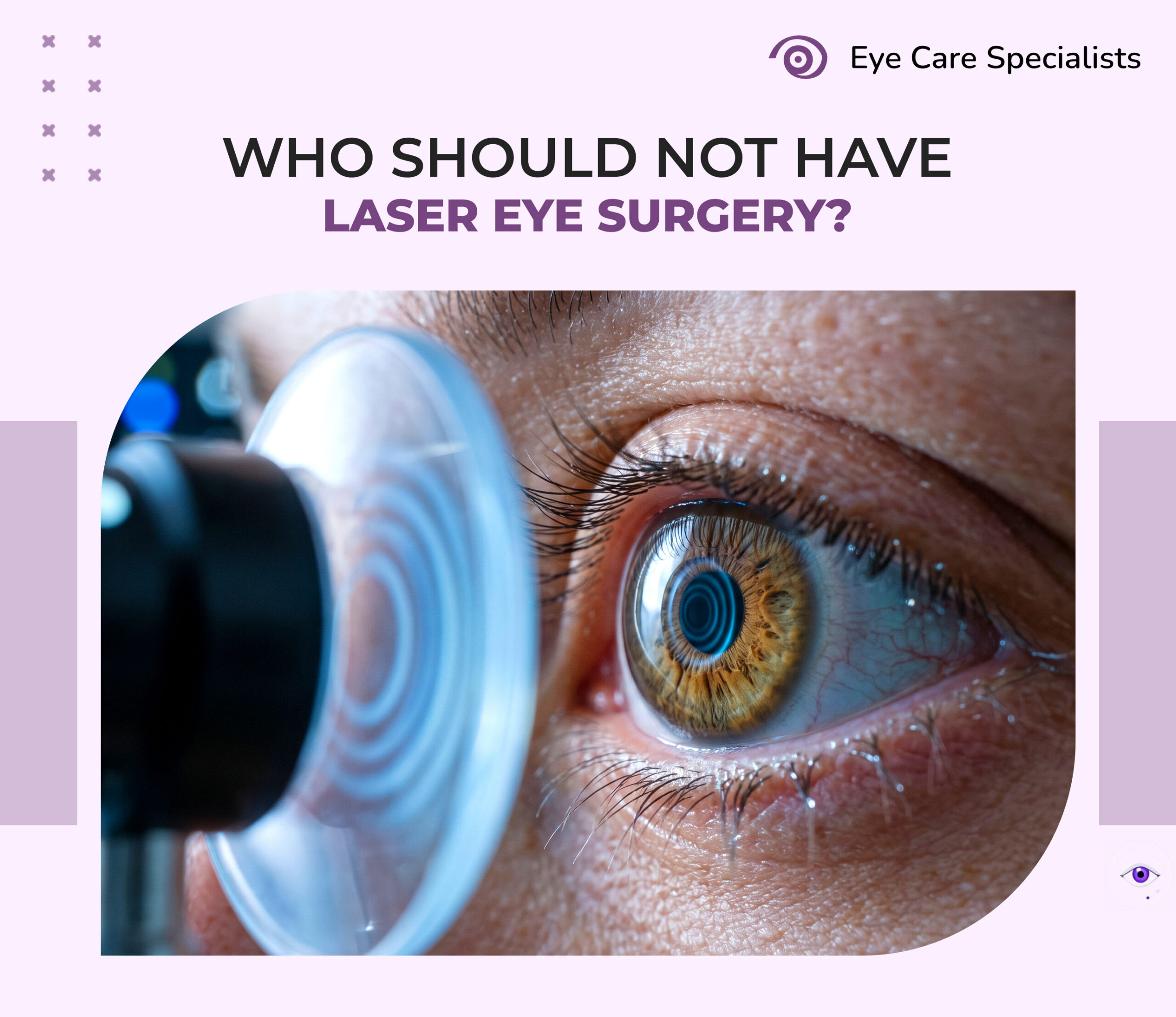
LASIK eligibility generally requires being at least 18 years old, having a stable vision prescription, and having healthy corneas with enough thickness for laser reshaping. Your ophthalmologist also checks your tear film, overall eye health, medical history, and medications. Thin or irregular corneas, severe dry eye, pregnancy, or a changing prescription may mean LASIK should be avoided or postponed.
If you have myopia (nearsightedness), you may be tired of relying on glasses or contact lenses to see clearly. LASIK can offer an alternative by reshaping the cornea so light focuses more accurately on the retina.
The procedure can correct myopia, hyperopia (farsightedness), and astigmatism in suitable candidates.
Most adults with a stable prescription and healthy eyes may qualify for LASIK after a comprehensive eye examination. However, not everyone is a suitable candidate.
Thin or irregular corneas, severe dry eye, and certain eye or medical conditions can make surgery unsuitable or require treatment before you can proceed.
Understanding who should not have laser eye surgery helps you recognize when waiting for LASIK could be the better option.
Ophthalmologists assess your prescription, corneal health, tear film, and overall eye health before recommending treatment. They can also discuss alternatives if LASIK isn’t right for you.
This blog explains the factors that affect LASIK eligibility, the tests used to assess suitability, and the vision correction options you may consider if LASIK is not right for you.
Key Highlights: LASIK Eligibility
- LASIK may need to be delayed if your prescription is changing, you’re pregnant, or you have certain eye or medical conditions.
- Thin or irregular corneas, keratoconus, severe dry eye, and active eye infections can affect eligibility.
- Diabetes, autoimmune diseases, and certain medications may affect healing and surgical risks.
- A comprehensive eye exam, including corneal topography and tomography, helps assess your suitability.
- If LASIK isn’t right for you, PRK, SMILE, implantable lenses, glasses, or contact lenses may be alternatives.
Who Should Avoid or Postpone Laser Eye Surgery?
LASIK may not suit everyone, and some people may need to postpone surgery until their eyes are healthy and their prescription is stable.
Factors such as corneal thickness, existing eye conditions, and certain medical issues can affect eligibility.
The following table outlines common reasons to avoid or delay laser eye surgery and what may happen next:
| Factor | Why it matters | Likely next step |
|---|---|---|
| Age or changing prescription | An unstable prescription can lead to unpredictable results. | Recheck prescription stability before considering surgery. |
| Pregnancy or breastfeeding | Hormonal changes can affect vision and the tear film. | Postpone surgery until vision stabilizes. |
| Thin or irregular cornea | May increase the risk of corneal ectasia, a condition in which the cornea weakens and bulges. | Assess corneal shape with topography or tomography and discuss alternatives if needed. |
| Significant dry eye or active infection | An unhealthy ocular surface can affect healing. | Treat the underlying condition and reassess eye health before surgery. |
| Other eye or medical conditions | Cataracts, glaucoma, uncontrolled diabetes, and some autoimmune conditions may affect eligibility. | Review individual risks and suitable alternatives with an ophthalmologist. |
How Do Age, Prescription Changes, and Pregnancy Affect LASIK Eligibility?
LASIK eligibility depends on age, prescription stability, and hormonal changes. Adults with a changing prescription may need to wait until their vision stabilizes.
Pregnancy and breastfeeding can temporarily affect vision and eye measurements. An ophthalmologist can determine when surgery may be appropriate.
Why Might You Need to Wait Even After Turning 18?
LASIK may be an option for adults who want to reduce their dependence on glasses or contact lenses. However, eye development and prescription stability also matter when determining the right time for surgery.
- Changing prescription: Your vision may still be changing, making results less predictable.
- Corneal concerns: An irregular cornea may increase surgical risks.
- Existing eye problems: Conditions such as blepharitis may need treatment before surgery.
- Eye development: Your eyes must be suitable for the procedure, not just meet the minimum age requirement.
Why Is Laser Eye Surgery Usually Postponed During Pregnancy or Breastfeeding?
Pregnancy and breastfeeding can temporarily affect vision, making it harder to confirm the right prescription for LASIK. Ophthalmologists usually recommend waiting until these changes settle.
- Hormonal changes: May temporarily alter the cornea and affect refractive error.
- Unreliable measurements: Changes in corneal shape can affect preoperative assessments.
- Dry eyes: Hormonal shifts may worsen dryness and affect comfort after surgery.
- Medication considerations: Postoperative eye drops may require extra consideration during pregnancy or breastfeeding.
Which Eye Conditions Can Make Laser Eye Surgery Unsuitable?
Certain eye conditions, including keratoconus, severe dry eye, active infections, and advanced cataracts, can make LASIK unsuitable or require treatment first. However, LASIK can fix astigmatism along with nearsightedness and farsightedness.
These refractive errors can be corrected with laser-assisted treatment. The procedure reshapes the cornea, allowing more light to reach the retina and reducing dependence on glasses.
Why Do Thin Corneas, Keratoconus, and High Prescriptions Matter?
LASIK reshapes the cornea to correct vision, so its thickness, shape, and prescription range all matter. Certain corneal conditions or stronger prescriptions can increase surgical risks.
- Thin corneas: Removing tissue may leave the cornea too weak.
- Keratoconus: This condition weakens and thins the cornea, increasing the risk of further bulging.
- High prescriptions: Correcting stronger refractive errors may require removing more corneal tissue.
- Irregular corneal shape: Abnormal measurements may signal a higher risk of corneal ectasia after surgery.
Can Dry Eye, Infections, or Eyelid Inflammation Delay Surgery?
Yes, dry eye, eye infections, and eyelid inflammation can delay LASIK until the condition improves. These problems can affect healing and visual results.
Dry eye can disrupt the tear film and cause blurred vision, while blepharitis can worsen irritation by inflaming the eyelids. Keratitis, or corneal inflammation, also needs attention before surgery.
Your ophthalmologist can recommend treatment and reassess your eyes once the condition improves.
If you also have presbyopia, which makes close-up focusing harder with age, your surgeon can discuss whether LASIK or another vision correction option better suits your needs.
How Do Cataracts, Glaucoma, and Other Eye Diseases Affect the Decision?
Cataracts, glaucoma, and other eye diseases can affect LASIK eligibility because they may influence vision, eye health, or surgical outcomes. The decision depends on the condition and its severity.
- Cataracts: Clouding of the eye’s lens may require cataract surgery rather than LASIK.
- Glaucoma: Optic nerve damage may affect suitability and requires careful evaluation.
- Retinal conditions: Certain retinal problems may need assessment or treatment before vision correction surgery.
- Previous eye surgery: Past procedures can affect corneal health and surgical planning.
- Other eye diseases: Conditions affecting the cornea or overall eye health may increase risks or require treatment first.
An ophthalmologist can assess your eye health and recommend whether LASIK, another procedure, or a different vision correction option is appropriate.
Which Medical Conditions or Medications Can Affect Laser Eye Surgery?
Certain medical conditions, eye problems, and medications can affect your eligibility for LASIK, healing, or your risk of complications. Your surgeon will review these factors before recommending surgery.
- Uncontrolled diabetes: High blood sugar can slow healing and affect vision stability.
- Autoimmune diseases: Active lupus or rheumatoid arthritis may interfere with healing.
- Thin or irregular corneas: These can increase the risk of corneal weakening after LASIK.
- Keratoconus: This condition weakens the cornea and generally makes LASIK unsuitable.
- Severe dry eye: Can worsen after surgery and affect visual comfort.
- Cataracts: Clouding of the eye’s lens may require cataract surgery instead.
- Glaucoma: Requires careful assessment because the disease and its treatment can affect surgical planning.
- Active eye infections or inflammation: Conditions such as keratitis or blepharitis may need treatment before surgery.
- Isotretinoin (Accutane): This acne medication can worsen dry eye and affect healing.
- Corticosteroids, such as prednisone: Long-term use may affect healing and requires review.
- Amiodarone: This heart medication can cause visual side effects that need assessment.
How Can a Surgeon Determine Suitability and Discuss Alternatives?
A surgeon determines LASIK suitability through a comprehensive eye exam and a review of your medical history. They assess your prescription, corneal shape, eye health, and healing risks before recommending surgery.
If LASIK is not suitable, they can discuss alternatives such as PRK, SMILE, implantable contact lenses, or glasses.
What Tests and Personal Factors Are Assessed?
Your surgeon will assess your eye health, vision, and medical history to determine whether LASIK is suitable for you. These tests and factors help identify potential risks and guide treatment choices.
- Prescription: Checks the type and degree of refractive error.
- Corneal topography: Maps the cornea’s surface to identify irregular shapes.
- Corneal tomography: Examines the cornea’s shape and structure in greater detail.
- Corneal thickness: Helps determine whether enough tissue can safely remain after LASIK.
- Tear production: Checks for dry eye, which can affect comfort and recovery.
- Overall eye health: Screens for conditions such as cataracts, glaucoma, and corneal disease.
- Medical history: Reviews existing conditions, medications, and previous eye procedures.
- Age and prescription stability: Helps establish whether your vision is stable enough for surgery.
- Lifestyle and expectations: Considers your daily visual needs and expected results.
Could PRK, SMILE, or a Nonlaser Option Be More Suitable?
Yes. If LASIK isn’t suitable for your eyes, PRK, SMILE, or a nonlaser option may still correct your vision. The right choice depends on your corneal health, prescription, eye conditions, and individual needs.
PRK (Photorefractive Keratectomy)
PRK surgery may suit people whose corneas aren’t ideal for LASIK. It reshapes the cornea without creating a flap, but recovery usually takes longer.
SMILE (Small Incision Lenticule Extraction)
SMILE may be an option for eligible people with nearsightedness, with or without certain levels of astigmatism. It uses a small incision rather than creating a LASIK-style flap, but it is not suitable for every prescription or eye condition.
Nonlaser Options
- ICL (Implantable Collamer Lens): May suit people with higher prescriptions or corneas unsuitable for laser reshaping.
- Refractive lens exchange (RLE): May be considered for selected patients, particularly those with age-related focusing changes.
- Glasses or contact lenses: Remain safe, effective options when surgery carries added risks or is not preferred.
Discover the Suitable Vision Correction Options with Eye Care Specialists
Clearer vision starts with understanding what works best for your eyes. Knowing who shouldn’t have laser eye surgery can help you make an informed treatment decision.
Factors such as corneal health, prescription stability, and existing eye conditions help determine your options. A comprehensive eye exam provides the clarity you need to move forward.
At Eye Care Specialists, we offer vision correction treatments tailored to individual needs. Our experienced team of ophthalmologists carefully assesses your eyes, prescription, and medical history before recommending a procedure.
Schedule an appointment with our team to discuss your vision goals and treatment options.
LASIK Eligibility: FAQs
1. Can one eye qualify for laser eye surgery while the other does not?
Yes, one eye can be qualified for laser eye surgery while the other one isn’t. It may happen because of the different parameters of the eyes’ corneas. Your ophthalmologist will examine your eyes individually to suggest the procedure.
2. Can laser eye surgery improve vision affected by a lazy eye?
Laser eye surgery can correct refractive errors in an eye affected by amblyopia, commonly called a lazy eye. However, it cannot directly reverse the brain’s reduced use of that eye. The amount of visual improvement depends on the underlying condition.
3. How long should I stop wearing contact lenses before an assessment?
The recommended break depends on your contact lens type and how your cornea responds. Soft lenses may need to be removed for several days, while rigid lenses can require several weeks or longer. Follow your clinic’s instructions before measurements.
4. Can I have another laser procedure if I have already had LASIK or PRK?
It is possible, depending on whether or not you satisfy the conditions for a new laser eye procedure. Your surgeon needs to evaluate how thick your cornea is, what your prescription is, and other factors.
5. Does a family history of keratoconus affect LASIK eligibility?
Yes, you need to tell the doctor about having a history of keratoconus in your family because it causes thinning and bulging of the cornea. Your ophthalmologist might need to do some imaging on the cornea to determine its state.
6. Does color blindness affect laser eye surgery eligibility?
Color blindness does not normally stop someone from having laser eye surgery. LASIK treats refractive problems, not problems with color vision. But, if you need special color vision for work, make sure you meet the requirements.
7. Should I mention existing floaters or previous retinal treatment?
Yes, you should inform your eye doctor of the existing floaters and retinal treatment in the past, as they can be benign, but the sudden appearance of new floaters or flashes might be an indication of a retinal problem.
8. Could laser eye surgery affect aviation, military, or other career requirements?
Yes, laser eye surgery may affect eligibility for certain occupations like aviation, military, and law enforcement roles. It is because these professions have specific requirements for procedures, recovery periods, or visual performance. It is advisable that you consult on this issue prior to undergoing such an operation.
9. Can I seek a second opinion after being declined for surgery?
Yes, you can seek a second opinion to know more about your vision correction options. Another eye doctor can examine your results and determine whether you should undergo surgery. In fact, a second opinion might reinforce your belief that surgery would be the wrong decision.
10. Is choosing to keep wearing glasses reasonable even if I qualify?
Absolutely. Being qualified for LASIK surgery does not necessarily mean that it is mandatory for you. Glasses and contacts are still very effective in correcting your eyesight. It all depends on your personal considerations.