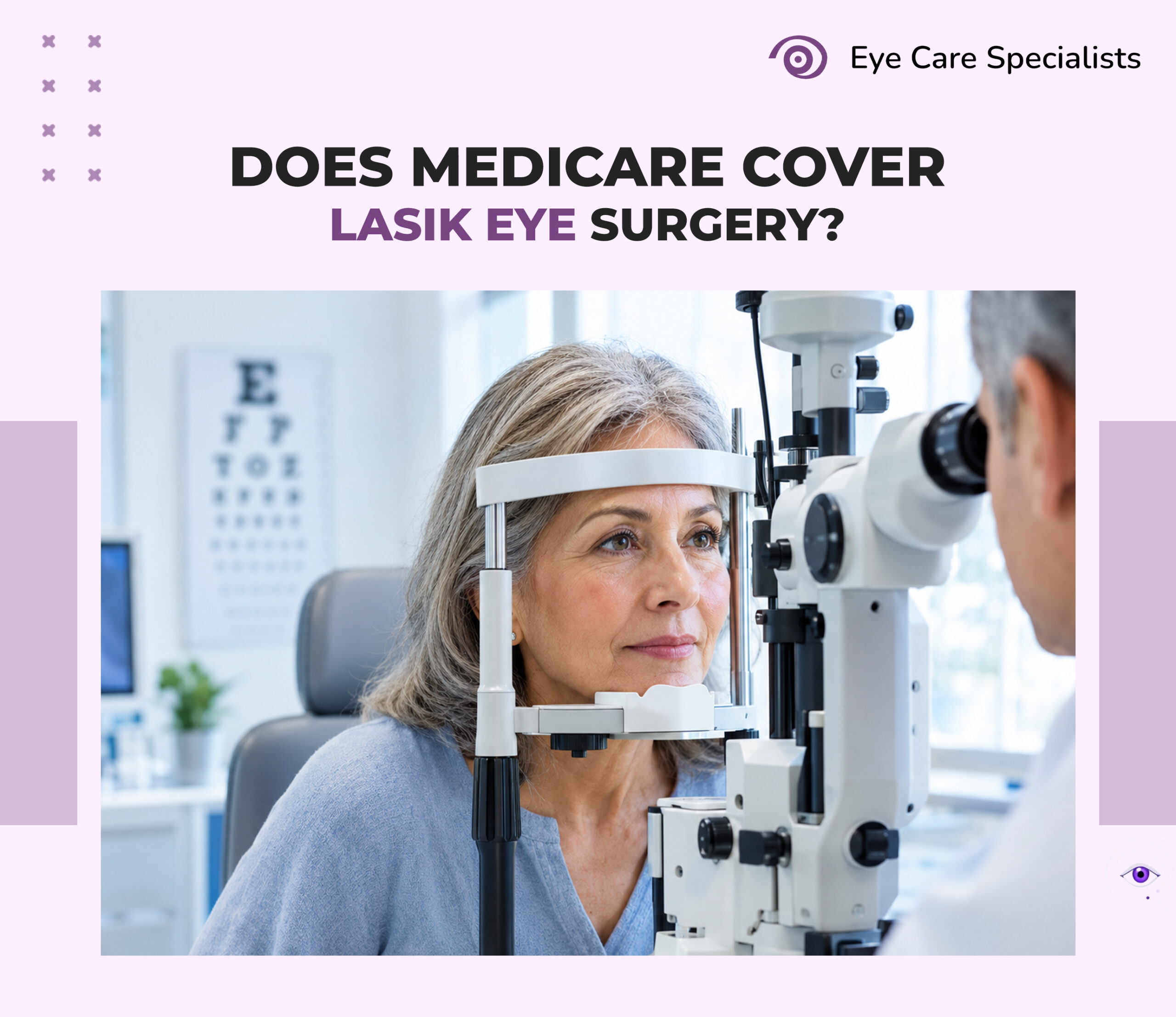
LASIK eye surgery can make everyday life easier by reducing your dependence on glasses or contact lenses. However, the cost may be a concern, especially as you approach retirement.
You may ask, “Does Medicare cover LASIK eye surgery?” If it does, you can plan your expenses properly.
Original Medicare, which includes Parts A and B, generally covers medically necessary eye care. LASIK is different because it is usually considered an elective procedure.
Glasses or contact lenses can correct most refractive errors without surgery. For this reason, Medicare typically does not pay for LASIK, even if you want to stop relying on corrective lenses.
Your coverage options may vary if you have a Medicare Advantage plan or separate vision benefits. These plans generally do not cover LASIK, but some may offer discounts.
Understanding Medicare LASIK coverage can help you make informed decisions before scheduling surgery.
Read on to learn when Medicare may cover eye surgery and what other options could help manage your LASIK expenses.
Why Doesn’t Original Medicare Cover LASIK Eye Surgery?
Original Medicare covers many eye care services when they are medically necessary. However, LASIK falls into a different category. It usually corrects refractive errors rather than treating an eye disease or injury. This distinction explains why Medicare generally leaves LASIK costs to the patient.
Here are the main reasons:
- It is elective: LASIK is usually a personal choice to reduce dependence on glasses or contact lenses.
- Alternatives are available: Glasses and contact lenses can correct most refractive errors without surgery.
- Medicare doesn’t cover routine vision correction: Medicare Part B doesn’t cover procedures performed solely to correct refractive errors.
- Routine vision benefits are limited: Original Medicare generally excludes routine eye exams and most prescription eyewear, leaving patients to pay the LASIK out-of-pocket cost themselves.
Does Medicare Cover LASIK If a Doctor Says It Is Medically Necessary?
A doctor’s recommendation does not automatically make LASIK eligible for Medicare coverage. Original Medicare, including Parts A and B, generally excludes LASIK even when a doctor recommends the procedure.
However, coverage may apply to other eye procedures when specific medical conditions are involved:
- Medically necessary treatment: Medicare may cover eligible eye surgery needed to treat an eye condition, depending on the circumstances.
- Cataract surgery: Medicare Part B generally covers medically necessary cataract surgery, including a qualifying conventional intraocular lens (IOL).
- Other insurance options: Some private plans offer discounts. LASIK financing options, health savings accounts, and flexible spending accounts may help manage costs.
Can Medicare Advantage or Medigap Help Pay for LASIK?
Original Medicare doesn’t generally cover LASIK. Medicare Advantage plans may offer additional vision benefits or LASIK discounts, but you should confirm any specific LASIK benefit directly with your plan.
Moreover, Medigap helps cover certain out-of-pocket costs associated with Original Medicare, but it typically doesn’t pay for excluded procedures like LASIK.
Understanding these differences can help you identify potential discounts and plan for your expenses.
| Coverage type | What readers need to know |
|---|---|
| Original Medicare: Parts A and B | Generally does not cover LASIK because it is an elective vision-correction procedure. |
| Medicare Advantage: Part C | Some plans offer extra vision benefits or LASIK discounts. Check your specific plan for coverage details and restrictions. |
| Medigap | Helps pay certain out-of-pocket costs for services covered by Original Medicare. It generally does not cover LASIK. |
| Separate vision plan or discount program | May offer reduced LASIK prices or access to participating providers. Check the terms, eligible providers, and any restrictions before scheduling surgery. |
How Can You Check Whether Your Medicare Advantage Plan Offers a LASIK Benefit or Discount?
Some Medicare Advantage plans offer vision benefits or discounts that may help reduce LASIK costs. Checking your plan details can help you understand what’s available before booking surgery.
Here are a few simple steps to follow:
- Review your plan documents: Look for LASIK coverage, vision benefits, or elective surgery discounts.
- Call your insurer: Ask directly, “Does Medicare cover LASIK through my Part C plan, or is a discount available?”
- Check the provider network: Confirm whether your preferred LASIK clinic participates in the discount program.
- Ask about costs: Find out whether restrictions, fees, or other out-of-pocket expenses apply.
Which Eye Treatments Does Medicare Cover Instead of LASIK?
Although Medicare generally doesn’t cover LASIK, it may cover certain eye treatments when they meet specific medical requirements. These include:
- Cataract surgery: Medicare Part B generally covers medically necessary cataract surgery and a qualifying intraocular lens (IOL), subject to coverage rules and cost-sharing.
- Diabetic eye exams: Medicare covers certain eye exams for people with diabetes to check for diabetic retinopathy.
- Glaucoma screenings: Eligible beneficiaries at higher risk can receive a covered glaucoma screening once every 12 months.
- Macular degeneration treatment: Medicare may cover certain diagnostic tests and treatments for age-related macular degeneration when medically necessary.
Is Laser Cataract Surgery Covered the Same Way as LASIK?
Medicare may cover medically necessary cataract surgery, including laser-assisted surgery, when coverage requirements are met.
The key difference is the procedure’s purpose: cataract surgery removes a clouded natural lens. It replaces it with an artificial intraocular lens (IOL), while LASIK corrects refractive errors by reshaping the cornea.
Whether LASIK is covered by insurance depends on your plan, but Medicare generally excludes routine LASIK. Here are the options to consider:
- Original Medicare (Parts A and B): Part B generally covers eligible cataract surgery and a standard intraocular lens, subject to applicable costs and coverage rules. Advanced lens upgrades or additional laser-assisted services may cost extra.
- Medicare Advantage (Part C): Plans must cover Medicare-covered cataract services but may have different costs and provider network rules.
- Medigap: May help pay certain out-of-pocket costs for Medicare-covered cataract surgery, depending on your policy. It generally does not cover LASIK.
- Private vision plans: May offer LASIK discounts, but benefits vary by policy. Check the details before scheduling surgery.
How Much Will You Pay for LASIK, and What Payment Options Are Available?
LASIK can be a significant investment, typically costing $2,500 to $3,000 per eye. Because Original Medicare generally doesn’t cover this elective procedure, you may need to pay the full amount yourself. However, several payment options may help make the expense more manageable.
- Vision plan discounts: Some vision plans offer reduced LASIK rates through participating providers. Check your benefits before booking.
- Financing plans: Some providers offer monthly payments or medical financing. Review interest rates, fees, and repayment terms carefully.
- Provider discounts: Ask the LASIK practices about available promotions or special pricing.
Can You Use HSA or FSA Funds for LASIK While Enrolled in Medicare?
Yes. You can generally use existing HSA or FSA funds to pay for eligible LASIK expenses, even if you’re enrolled in Medicare. These accounts can help you manage costs with tax-advantaged funds.
- HSA for LASIK: You can use money already in your health savings account to pay for eligible LASIK costs tax-free. However, enrolling in Medicare generally makes you ineligible to contribute to an HSA.
- FSA for LASIK: If you have an eligible health flexible spending account through your employer, you can generally use its funds for LASIK. FSA availability depends on your employment and plan rules.
Before scheduling surgery, confirm eligibility with your account administrator and check your remaining balance.
Can Financing or Vision Discounts Reduce Your LASIK Costs?
Yes. Financing plans and vision discounts can help lower your upfront LASIK expense, even when Medicare doesn’t cover the procedure. Examples of insurers and vision plans that may offer LASIK discounts include:
- Harvard Pilgrim Health Care: Eligible members may have access to LASIK discounts through participating providers.
- EyeMed: Some plans offer discounted laser vision correction through participating providers.
- Davis Vision: Eligible members may access LASIK discounts through participating providers.
- Aetna: Certain plans may offer negotiated LASIK pricing or discounts.
- Cigna: Some plans may provide access to LASIK discounts through selected providers.
What Should You Do Before Scheduling LASIK?
Before booking LASIK, take time to understand your coverage, expected costs, and whether the procedure suits your vision needs. A little preparation can help you avoid unexpected expenses and make a confident decision.
Here are a few steps to take before scheduling surgery:
- Confirm your coverage: Contact your insurer to check whether any LASIK benefits or discounts apply.
- Ask for a cost estimate: Request a breakdown of the procedure fee, follow-up visits, and any additional charges.
- Explore payment options: Check whether HSA or FSA funds, financing, or provider discounts are available.
- Schedule a consultation: An eye doctor can assess your eyes and determine whether LASIK is appropriate for you.
- Understand the risks: Discuss possible side effects, recovery time, and alternative vision-correction options before deciding.
Understand Your LASIK Costs With Eye Care Specialists
Now that you know whether Medicare covers LASIK eye surgery, you can make an informed decision. Because it’s an elective procedure, insurance may not directly cover the treatment, but some plans may offer discounts.
Medicare Advantage discounts, private vision benefits, and eligible HSA or FSA funds may help manage the expense. Before scheduling surgery, review your coverage and ask your provider about available payment options.
At Eye Care Specialists, our team ensures you take the next step towards clearer vision. Every patient’s eyes are different, so a professional evaluation is essential. Knowing what to expect can help you prepare for the procedure and its costs.
Explore our eye treatment options to find the one that best fits your concerns.
FAQs
1. Does Qualifying for Medicare Before Age 65 Change LASIK Coverage?
No. Qualifying for Medicare before age 65 does not change its standard LASIK coverage rules. Original Medicare generally excludes LASIK performed to correct refractive errors, regardless of age or eligibility reason.
2. Will Medicare Cover Treatment for a Complication After Self-Paid LASIK?
Medicare may cover medically necessary treatment for a LASIK complication if the service meets its coverage rules. Coverage depends on the specific problem and treatment needed, not simply on whether you paid for LASIK yourself.
3. Does Medicare Part D Cover Prescription Eye Drops After LASIK?
Medicare Part D may cover eligible prescription eye drops, depending on your drug plan’s formulary and coverage rules. However, drops prescribed solely for routine recovery after elective LASIK may not be covered. Confirm coverage with your plan.
4. Does Medicare Cover PRK or SMILE as Alternatives to LASIK?
Original Medicare generally does not cover PRK or SMILE when performed to correct refractive errors. Medicare usually considers these procedures elective vision correction. Check your Medicare Advantage plan for any available discounts or additional benefits.
5. Will Medicare Cover a LASIK Enhancement Years After the Original Procedure?
Medicare generally does not cover LASIK enhancements performed to fine-tune vision after the original surgery. If an enhancement is recommended, ask your surgeon about the reason, expected cost, and whether any separate insurance benefits apply.
6. Can You Appeal a Medicare Advantage Denial of a Listed LASIK Benefit?
Yes. You can appeal a Medicare Advantage plan’s denial if you believe it contradicts your listed benefits. Review the denial notice, gather supporting documents, and follow your plan’s appeal instructions and deadlines.
7. Do Self-Paid LASIK Charges Count Toward a Medicare Advantage Out-of-Pocket Maximum?
Generally, no. Money you pay for a noncovered LASIK procedure typically does not count toward your Medicare Advantage plan’s annual out-of-pocket maximum. Check your plan documents to confirm how it treats excluded services and discounts.
8. Can Your Spouse’s HSA Be Used to Pay for Your LASIK?
Yes, if you are the HSA account holder’s spouse and the expense qualifies under IRS rules. HSA funds can generally pay for a spouse’s eligible LASIK expenses tax-free, even if that spouse is enrolled in Medicare.
9. Can You Claim a Tax Deduction for LASIK Expenses Paid Out of Pocket?
Possibly. LASIK may qualify as a medical expense for federal tax purposes, but you must itemize deductions and meet the applicable adjusted gross income threshold. Expenses reimbursed by insurance or tax-advantaged accounts cannot be deducted again.
10. Does Medicare Cover LASIK Performed Outside the United States?
Generally, no. Original Medicare usually does not cover elective LASIK performed outside the United States. Medicare has limited exceptions for certain foreign medical services, but routine international vision-correction surgery typically does not qualify.