LASIK can cause permanent vision loss and, in some cases, blindness. The U.S. Food and Drug Administration warns that serious complications can damage vision, so it is inaccurate to say the risk is zero.
It is a refractive surgery that reshapes the cornea, the clear front surface of the eye. By doing so, it helps light focus properly on the retina.
This can correct nearsightedness, farsightedness, and astigmatism, reducing your need for glasses or contact lenses.
Most people who qualify for the procedure see better, though results vary from person to person.
Some may experience dry eyes, glare, or halos around lights while their eyes heal. Serious complications are uncommon, but you shouldn’t overlook them.
Your eye health, suitability for surgery, and your ophthalmologist’s experience all affect the outcome.
This blog examines whether you can go blind from LASIK, what research says about vision problems, and how proper screening and aftercare help protect your eyes. It also explains which symptoms need immediate medical attention.
Key Highlights
- Permanent vision loss is a possible complication of LASIK, although most patients are satisfied with their results.
- LASIK surgery involves reshaping the cornea to help correct myopia, hyperopia, and astigmatism.
- An eye examination helps identify factors that can contribute to complications.
- Dry eyes, glare, halos, and blurred vision may develop after surgery. Some symptoms can persist.
- Sudden vision loss, severe eye pain, or worsening symptoms require urgent medical attention.
- Following your doctor’s advice and attending follow-up visits help support the healing process.
Can LASIK Cause Permanent Blindness or Other Lasting Vision Problems?
LASIK changes the cornea’s shape to correct refractive errors and improve focus. However, it cannot protect against every eye condition or age-related change.
Problems affecting other parts of the eye can still develop, and complications during healing may sometimes affect vision long-term.
How Does LASIK Reshape the Cornea?
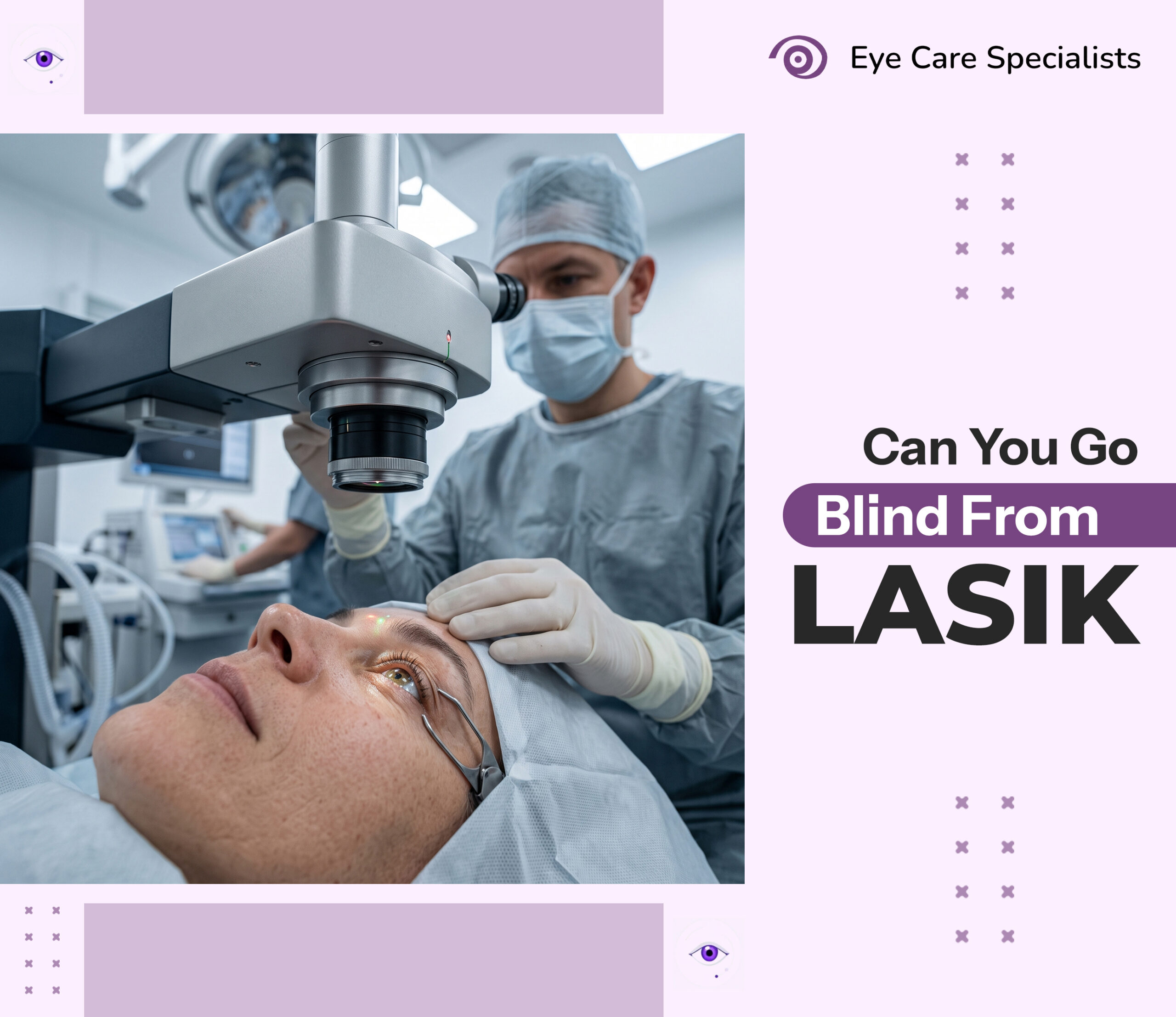
LASIK corrects vision by reshaping the cornea, the eye’s clear front surface. This helps light focus properly on the retina, reducing dependence on glasses or contact lenses.
The procedure involves a few key steps:
- Numbing the eye: The surgeon applies anesthetic eye drops to keep you comfortable during surgery.
- Creating a corneal flap: A thin flap is made on the cornea and gently lifted to expose the tissue underneath.
- Reshaping the cornea: An excimer laser removes tiny amounts of tissue to correct myopia (nearsightedness), hyperopia (farsightedness), or astigmatism.
- Replacing the flap: The surgeon repositions the flap, and it begins healing naturally without stitches.
How Is Blindness Different From Blurry Vision or Reduced Visual Acuity?
Blindness and blurry vision are not the same. Knowing the difference can help you understand what to expect after LASIK and when your vision needs attention.
What You See
Blurry vision makes objects look hazy or out of focus, while blindness involves a much more severe loss of sight. After LASIK, temporary blurriness does not automatically mean something has gone wrong.
Severity of Vision Loss
Reduced visual acuity means you struggle to see fine details clearly, even when looking directly at an object. Blindness involves a more substantial loss of sight that can affect everyday activities, depending on how much vision remains.
Common Symptoms
Some people experience starbursts around lights, double vision, or light sensitivity after LASIK. These symptoms may affect night vision, particularly during recovery.
They often improve as the eye heals, but persistent symptoms warrant an eye exam.
Possible Causes
Temporary blurry vision can occur while the eyes heal after corneal reshaping. In some cases, complications such as infection, inflammation, flap complications, or epithelial ingrowth can affect vision.
Undercorrection or overcorrection may also leave someone with less-than-expected visual improvement.
What Do Studies Tell Us About the Chances of Vision Problems After LASIK?
Research shows that satisfaction after LASIK can be high, but satisfaction does not mean every patient is free from side effects.
In the FDA’s Patient-Reported Outcomes with LASIK (PROWL) studies, more than 95% of participants were satisfied with their vision after surgery. However, up to 46% of participants who had no visual symptoms before surgery reported at least one visual symptom three months afterward.
These findings show why it is important to discuss both the expected benefits and possible complications. They do not establish an exact likelihood of blindness or guarantee an individual patient’s outcome.
Who May Face Greater LASIK Risks, and How Can Those Risks Be Reduced?
LASIK is usually not painful during the procedure because the ophthalmologist uses numbing eye drops. However, you may feel brief pressure when the suction ring is applied.
Certain eye conditions and health factors can increase the chance of complications, but proper screening helps identify who may benefit from the procedure.
People With an Unstable Prescription
Frequent changes in vision can make the results less predictable. Waiting until the prescription has remained stable helps improve the chances of a good outcome.
People With Thin or Irregular Corneas
Corneal problems can increase the risk of complications after surgery. A thorough preoperative evaluation helps determine whether LASIK is suitable or whether another vision-correction option would be safer.
People With Existing Eye Conditions
Severe dry eyes or other eye problems may affect healing and visual results. An ophthalmologist can assess these conditions and recommend treatment or an alternative procedure when needed.
People at Greater Risk of Infection or Poor Healing
Certain health conditions and medications can interfere with recovery. Discuss your medical history with the surgeon and follow postoperative care instructions to reduce avoidable risks.
People Concerned About Night Vision
Those who already struggle with glare or poor night vision should discuss these symptoms before surgery. A detailed assessment helps the surgeon explain possible changes and set realistic expectations.
People With Unrealistic Expectations
Expecting perfect vision in every situation can lead to disappointment, even after successful surgery. Discussing the possibility of overcorrection or continued use of glasses helps you make an informed decision.
When Should You Seek Urgent Care for Vision Changes After LASIK?
Mild blurriness and light sensitivity are common during the early stages of LASIK recovery. But if your vision suddenly changes or your symptoms get worse, contact your eye surgeon without delay.
Seek urgent eye care if you notice any of the following:
- Sudden vision loss: Get medical help immediately rather than waiting to see if your sight returns to normal.
- Severe or increasing eye pain: Pain that gets worse instead of easing needs prompt attention.
- Redness or discharge: Increasing redness, unusual discharge, or swelling may point to an infection.
- Sudden visual disturbances: New flashes of light, a dark shadow across your vision, or a sudden increase in floaters need urgent assessment.
- Blurriness that persists or worsens: Your vision should gradually settle as your eyes heal. If it does not, your ophthalmologist should check for complications, even if your prescription was stable before surgery.
Make an Informed Decision About LASIK Surgery With Eye Care Specialists
Can you go blind from LASIK? Serious complications can cause permanent vision loss, including blindness. Although many patients achieve better vision, no eye surgery is completely risk-free.
Your eye health, corneal thickness, prescription stability, and recovery all influence the outcome. A thorough evaluation and realistic expectations can help you make a well-informed choice.
At Eye Care Specialists, we assess your vision needs and explain what LASIK may mean for your eyes. Our team discusses potential complications, answers your questions, and guides you through treatment and recovery.
We want you to feel informed and comfortable before making a decision about your vision.
Schedule a consultation with our eye care experts to discuss your treatment options for vision problems.
FAQs
1. Why Can Your Vision Dim During the LASIK Procedure?
Your vision may temporarily dim or become blurry when the suction ring is applied to keep your eye steady. This change usually resolves when suction is released. Your surgeon can explain what visual sensations to expect during the procedure.
2. What Happens if You Blink or Move Your Eye During LASIK?
You cannot blink normally during LASIK because an instrument keeps your eyelids open. Modern laser systems track eye movements and can pause treatment when necessary.
3. Can Looking at a Phone or Computer After LASIK Make You Blind?
No, looking at a phone or computer after LASIK will not make you blind. However, screen use may worsen dryness and eye strain during recovery. Follow your surgeon’s advice about returning to screens and taking breaks.
4. Can You Have LASIK on One Eye at a Time?
Yes, you can have LASIK on one eye at a time, although surgeons commonly treat both eyes in the same appointment. Your surgeon can discuss the advantages and drawbacks of each approach based on your prescription and eye health.
5. Does a Second LASIK Procedure Carry Additional Risks?
A LASIK enhancement may be appropriate for some patients, but another procedure can carry additional risks, including dryness or corneal complications. Your surgeon will assess your healing, corneal thickness, and vision stability before recommending further treatment.
6. Can Nearsightedness Return After LASIK Without Meaning You Are Going Blind?
Yes, nearsightedness can return or change after LASIK, but that doesn’t mean you are going blind. Your prescription can change over time for several reasons. If your vision becomes blurry again, arrange an eye examination to identify the cause.
7. Will You Still Need Reading Glasses as You Get Older After LASIK?
Possibly. LASIK can treat refractive errors, but it does not prevent presbyopia, an age-related loss of near focusing ability. Many people need reading glasses from around age 40 onward, even after successful LASIK.
8. Can You Still Have Cataract Surgery After LASIK?
Yes, you can have cataract surgery after LASIK. However, previous changes to the cornea can make calculating the replacement lens power more complex. Tell your surgeon about your LASIK history and provide earlier eye records if available.
9. Can LASIK Affect Future Glaucoma Screening?
Yes. LASIK changes the thickness and shape of the cornea, which can affect eye pressure measurements used during glaucoma screening. Tell your ophthalmologist that you have had LASIK so the results can be interpreted appropriately.
10. Can You Discuss Anxiety Medication Before LASIK?
Yes, you can discuss anxiety medication before LASIK with your ophthalmologist. They can assess whether medication is appropriate for you. Do not take anxiety medication before surgery unless your surgical team has approved it.